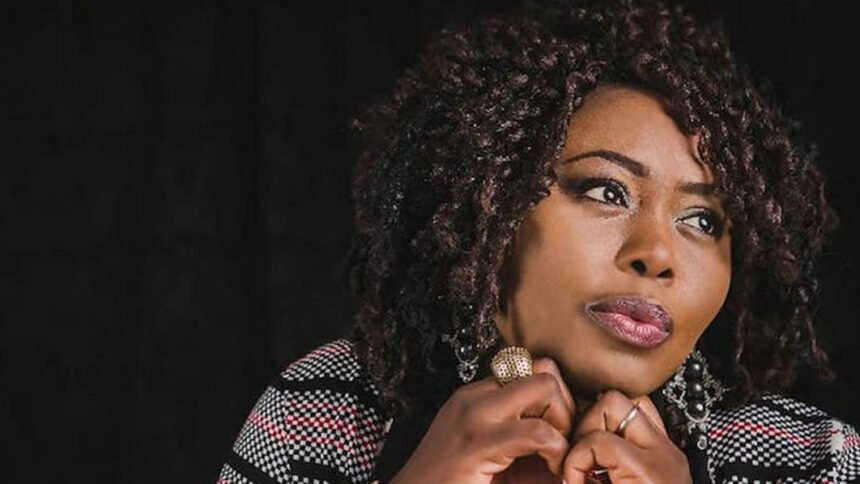
The Director of the Abuja International Film Festival (AIFF), Temitope Duker, has urged Nigerian filmmakers to embrace artificial intelligence (AI) to create digital sets, reduce production costs and expand storytelling.
She made the call on Tuesday night at the opening of the festival’s 23rd edition at Silverbird Cinemas in Abuja.
The 2026 festival runs from October 20 to 24 with the theme, “Frames without Borders: AI, Ethics, and the Future of Filmmaking”.
Duker described AI as an important creative tool in the digital age, saying it could expand storytelling without erasing its essence.
She said the technology was transforming filmmaking, from designing promotional materials to generating realistic characters and voices, making its adoption increasingly important for industry practitioners.
“Everything now has gone robotic and AI, even in filmmaking.
“Even the entire design for the festival this year was done by AI.
“In the past, you would have to go to a printer to do the designs and all that. But now with AI, you can actually do a lot, and the same applies to film,” she said.
Duker urged established and emerging filmmakers to explore the technology, noting that it had become an increasingly important part of the industry.
“It is important for us now as filmmakers to begin to embrace AI because whether we like it or not, it has come to stay,” she said.
She added that AI could generate realistic characters resembling known actors and reproduce their voices, provided the necessary permissions and agreements were secured.
“Now, if I want to shoot a film, maybe I want to use an actor, for instance, I could create a character that looks like him, and then use his voice and pay him,” she said.
Although she acknowledged concerns about AI, Duker described its potential as an opportunity for filmmakers to explore new production possibilities.
“Some see it as a threat, but for me, I think it’s a win-win, eventually,” she said.
She also highlighted the festival’s evolution, recalling that filmmakers initially submitted entries on VHS tapes before progressing to VCDs, DVDs and online platforms.
According to her, AIFF received hundreds of film entries this year, with 86 selected for the final programme and more than 30 earning nominations.
She said the organisers prioritised Nigerian productions to encourage local filmmakers and align the programme with discussions on AI.
“One of the things we paid attention to this year was that we were more indigenous. We have a lot of Nigerian films in selection,” she said.
Duker added that the festival provided emerging filmmakers with opportunities to screen their works, receive audience feedback and connect with established producers, distributors and other industry stakeholders.
“You don’t have to be one of the biggest studios or the biggest production houses to enter your film at a film festival,” she said.
“If it goes through the screening process, for a young filmmaker, there is nothing as beautiful as when your film is showing on the big screen,” she added.
Nollywood filmmaker Dickson Iroegbu, who also spoke at the event, said the festival’s 23-year journey demonstrated the importance of resilience and consistency in sustaining creative initiatives.
“Fidelis Duker and his crew have shown that what is worth doing is worth doing well, and being consistent is what will announce your eventual victory,” he said.
Iroegbu, a winner at the inaugural Africa Movie Academy Awards in 2005, called for stronger government support for Nollywood, noting that industry practitioners had helped the sector gain international recognition.
“Nollywood asserted itself on the global community, but what has not been intentionally harnessed by the government is the potential resident in Nollywood,” he said.
He also called for collaborations between AIFF and major international film festivals to expand opportunities for Nigerian filmmakers.
The opening ceremony attracted industry players, heads of government agencies and members of the diplomatic community, including representatives of the Chinese film industry.
In his goodwill message, the Executive Director and Chief Executive Officer of the National Film and Video Censors Board, Shaibu Husseini, commended the organisers for sustaining the festival for more than two decades.
He praised AIFF founder Fidelis Duker and his team for their consistency and dedication, describing the event as one of West Africa’s longest-running independently organised film festivals.
Husseini said the regulatory agency remained committed to supporting independent creative platforms that promote Nigeria’s film industry, stimulate the creative economy and serve as cultural tourism attractions.
The Director-General of the Nigerian Tourism Development Authority, Olayiwola Awakan, also praised AIFF for its role in promoting cultural exchange and inbound tourism.
Other government agencies that delivered goodwill messages included the Nigerian Film Corporation and the Nigerian Copyright Commission.
Earlier, AIFF founder Fidelis Duker said the theme of the 23rd edition was intended to stimulate discussions on AI and ethics in filmmaking.
He described the festival as a platform for showcasing Nigerian and international films and facilitating exchanges on co-production, distribution and investment, while creating opportunities for emerging talents.