Akeem Lasisi
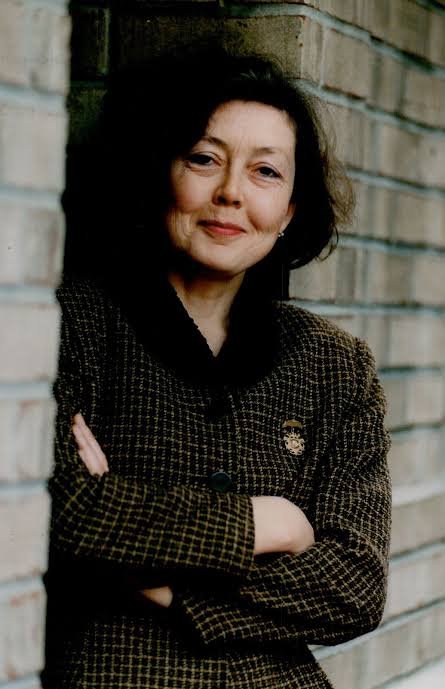
For poetry, it is a beautifully grand year as Canadian poet Anne Carson has been awarded this year’s Nobel Prize in Literature.
Also an essayist and translator, 70-year-old Carson is celebrated for works that often cross the boundaries between poetry, fiction and scholarship.
The Nobel Prize is awarded for a lifetime’s body of work and is regarded as the most prestigious award in global literature with the winner receiving 12 million Swedish kronor (£900,000, $1.2m).
With the victory, poetry has again asserted itself as a powerful genre capable of taking a verse priest to any heights.
Carson’s muse has toed the line of the likes of W. B. Yeasts, TS Elliot and Pablo Neruda who had won the global prize with poetry.
The Nobel Prize committee said they had selected her “for her bold and inventive oeuvre that, in playful dialogue with the classical tradition, has created new forms for contemporary literature”.
Anders Olsson, chairman of the Swedish Academy’s Nobel committee for Literature, praised the way Carson has “broken away from lyrical poetry bound to the narrative self and inspired new forms of contemporary literature”.
“This method of writing leads to playful and ironic works that move not only between classical and modern poetry but also between different genres and artforms,” he said.
Other poets who had won the Nobel Prize for Literature
Louise Glück (USA, 2020) – Awarded “for her unmistakable poetic voice that with austere beauty makes individual existence universal.”
Tomas Tranströmer (Sweden, 2011) – Awarded “because, through his condensed, translucent images, he gives us fresh access to reality.”
Seamus Heaney (Ireland, 1995) – Awarded “for works of lyrical beauty and ethical depth, which exalt everyday miracles and the living past.”
Derek Walcott (Saint Lucia, 1992) – Awarded “for a poetic oeuvre of great luminosity, sustained by a historical vision, the outcome of a multicultural commitment.”
Octavio Paz (Mexico, 1990) – Awarded “for impassioned writing with wide horizons, characterized by sensuous intelligence and humanistic integrity.”
Joseph Brodsky (Russia/USA, 1987) – Awarded “for an all-embracing authorship, imbued with clarity of thought and poetic intensity.”
Czesław Miłosz (Poland, 1980) – Awarded “who with uncompromising clear-sightedness voices man’s exposed condition in a world of severe conflicts.”
Odysseus Elytis (Greece, 1979) – Awarded “for his poetry, which, against the background of Greek tradition, depicts with sensuous strength and intellectual clear-sightedness man’s struggle for freedom and creativeness.”
Eugenio Montale (Italy, 1975) – Awarded “for his distinctive poetry which, with great artistic sensitivity, has interpreted human values under the sign of an outlook on life with no illusions.”
Pablo Neruda (Chile, 1971) – Awarded “for a poetry that with the action of an elemental force brings alive a continent’s destiny and dreams.”
Wislawa Szymborska (Poland, 1996) – Awarded “for poetry that with ironic precision allows the historical and biological context to come to light in fragments of human reality.”
Nelly Sachs (Germany/Sweden, 1966) – Awarded “for her outstanding lyrical and dramatic writing, which interprets Israel’s destiny with touching strength.”
Giorgos Seferis (Greece, 1963) – Awarded “for his eminent lyrical writing, inspired by a deep feeling for the Hellenic world of culture.”
Salvatore Quasimodo (Italy, 1959) – Awarded “for his lyrical poetry, which with classical fire expresses the tragic experience of life in our own times.”
Juan Ramón Jiménez (Spain, 1956) – Awarded “for his lyrical poetry, which in Spanish language constitutes an example of high spirit and artistical purity.”
Gabriela Mistral (Chile, 1945) – The first Latin American author to win the prize, awarded “for her lyric poetry which, inspired by powerful emotions, has made her name a symbol of the idealistic aspirations of the entire Latin American world.”
T. S. Eliot (UK/USA, 1948) – Awarded “for his outstanding, pioneer contribution to present-day poetry.”
Paul Valéry and Paul Claudel were major nominees, but Paul Heyse (Germany, 1910) and Verner von Heidenstam (Sweden, 1916) were among the early century poet laureates.
W. B. Yeats (Ireland, 1923) – Awarded “for his always inspired poetry, which in a highly artistic form gives expression to the spirit of a whole nation.”
Rabindranath Tagore (India, 1913) – The first non-European laureate, awarded “because of his profoundly sensitive, fresh and beautiful verse…”
Sully Prudhomme (France, 1901) – The very first recipient of the Nobel Prize in Literature.