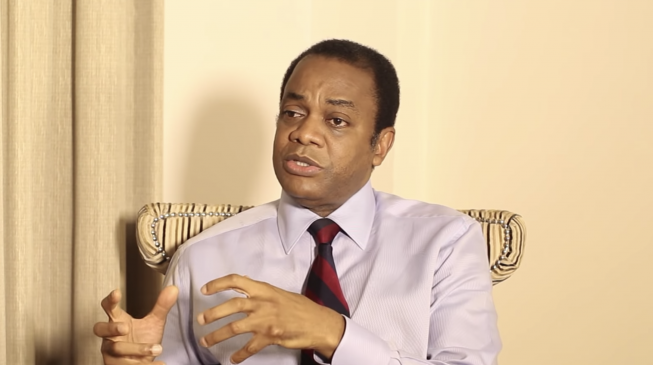
Peoples Redemption Party presidential candidate Donald Duke has said Nigerians were economically better off in 1999 than they are today, despite more than two decades of uninterrupted democratic rule.
Duke, a former governor of Cross River State, made the remarks during an interview on the Policy Without Politics podcast.
Nigeria returned to democratic rule in 1999 after years of military government, with former President Olusegun Obasanjo succeeding then military Head of State Abdulsalami Abubakar.
Duke argued that the country had failed to achieve meaningful economic progress despite population growth and increases in budgetary figures over the years.
“We’re really not in a democracy. It’s a facade. And with each cycle, we get poorer,” he said.
He maintained that Nigerians were better off in 1999, when the country was more affordable, than in 2026.
Duke also compared Nigeria’s current fiscal position with that of the administration of former President Shehu Shagari in the early 1980s. He argued that while Nigeria’s population had increased significantly, its annual budget, when measured in dollar terms, remained around the same level.
The PRP candidate attributed the naira’s depreciation to the apparent increase in the size of the country’s budget and argued that Nigeria had not recorded sufficient economic growth.
Duke also linked insecurity, including insurgency, banditry and kidnapping, to economic hardship, stressing that government’s primary responsibility should be to create a safe environment where citizens can be productive.
He criticised the use of foreign reserves as a major measure of economic performance, saying employment and productivity should instead be used to assess the strength of the economy.
“Let’s measure the value of our economy by the number of people who are working,” he said.
Duke added that government policies, including those on education, should ultimately focus on improving citizens’ productivity and living standards.