By Suara Sherif
The death of Oba Gbenga Sonuga has reopened conversations about the future of cultural administration in Nigeria, the sustainability of artistic institutions and the responsibility of a new generation to preserve the foundations laid by earlier pioneers.
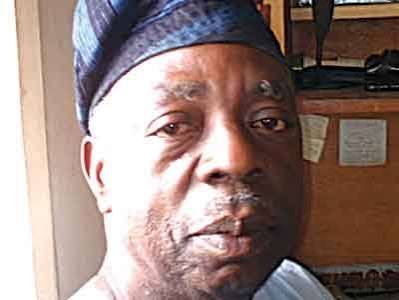
The passing of His Royal Highness, Oba Gbenga Gbadebo Sonuga, fondly known as “Baba Culture,” marks the departure of a man whose professional life was deeply intertwined with the development of Nigeria’s arts and cultural institutions. But beyond the tributes, recollections and expressions of grief surrounding his death lies a more consequential question: what happens to the cultural vision of a generation when some of its most influential architects are no longer here to defend and advance it?
Oba Sonuga, the Fadesewa of Simawa in Ogun State, was not simply a traditional ruler with an interest in the arts. Before ascending the throne, he built a distinguished career as a theatre practitioner, cultural administrator, producer and advocate. His influence, particularly during his decade-long leadership of the Lagos State Council for Arts and Culture between 1984 and 1994, established him as one of the notable figures in Nigeria’s cultural administration.
His death, announced by the Simawa Royal Family and Traditional Council, has therefore brought renewed attention to a part of Nigeria’s development that often receives less public attention than its more commercially visible creative industries: the institutions, structures and policies responsible for preserving and advancing the country’s cultural heritage.
Beyond the Man: The Institutions He Helped Build
To understand the significance of Oba Sonuga’s passing, it is important to revisit the institutional philosophy that defined his years in public service.
When he assumed leadership of the Lagos State Council for Arts and Culture in 1984, he inherited an institution whose activities were largely associated with cultural performances, particularly dance presentations for government functions.
His vision, however, extended beyond performances.
He reorganised the Council into specialised departments covering Design, Performing Arts, Architecture and Monuments, and Festivals. The restructuring reflected a broader understanding of culture as a sector requiring professional organisation, administrative direction and opportunities for practitioners across different disciplines.
This approach helped expand the institutional scope of cultural administration in Lagos State and provided a framework for activities beyond the conventional presentation of traditional performances.
His tenure also witnessed significant artistic engagements, including the international tour of ORI to the United States in 1986 and the production of SALT in 1989 as part of UNESCO’s World Decade for Cultural Development.
After leaving public service, he established the International Centre for the Arts, Lagos (ICAL), continuing his advocacy for cultural development and international artistic exchange.
These achievements raise an important consideration: cultural development is not sustained by talent and creativity alone. It also requires institutions capable of identifying, developing, supporting and preserving that creativity.
The Challenge of Institutional Continuity
One of the persistent questions surrounding cultural administration in Nigeria is how effectively institutions preserve their programmes, knowledge and long-term objectives across successive leaderships.
The death of a respected cultural pioneer provides an opportunity to examine this question more closely.
Cultural institutions are expected to function beyond the tenure of individual administrators. Their programmes should not depend entirely on the personalities occupying leadership positions, while their achievements should provide a foundation for subsequent administrations.
Yet the broader challenge of institutional continuity remains relevant to Nigeria’s cultural development.
Are the structures established by earlier cultural administrators being adequately maintained? Are historical programmes being documented and developed? Do emerging practitioners have access to the mentorship, infrastructure and institutional support necessary to build sustainable careers?
These questions are particularly important in a country where cultural heritage represents not only a source of national identity but also an opportunity for economic development, tourism and international influence.
The issue is not necessarily that nothing has been achieved since the generation of administrators to which Sonuga belonged. Rather, it is whether the lessons, institutional knowledge and long-term vision of that generation are being effectively transferred to those coming after them.
A New Creative Economy, But What About Cultural Foundations?
Nigeria’s creative industry has undergone significant changes over the years.
The international visibility of Nigerian music, film, fashion and digital entertainment has expanded the country’s cultural influence. Nollywood and Afrobeats, in particular, have demonstrated the commercial and international possibilities of Nigerian creativity.
However, the growth of commercially successful creative industries should not overshadow the importance of cultural institutions, traditional theatre, festivals, indigenous artistic practices, historical preservation and cultural research.
These areas form part of the foundation upon which a country’s wider creative identity is built.
Recent government initiatives indicate that cultural and creative development remains on the national policy agenda.
In April 2026, the Federal Ministry of Art, Culture, Tourism and the Creative Economy inaugurated four committees to develop policy, implementation, stakeholder engagement and monitoring frameworks for the sector. The initiative identified challenges including fragmented institutional responsibilities, inadequate financing and weaknesses in intellectual property protection.
The ministry also outlined ambitions to strengthen the creative economy’s contribution to national development and employment generation.
At the state level, Lagos has continued to pursue programmes aimed at developing its creative workforce. In May 2026, the Lagos State Government reported that more than 1,000 creatives had benefited from its Skill Up Lagos Initiative, designed to strengthen professional skills and support emerging artists and creative entrepreneurs.
These developments demonstrate that cultural and creative administration continues to evolve.
However, they also reinforce the need to consider whether contemporary initiatives adequately incorporate the institutional lessons of earlier cultural administrators.
The challenge is not simply to create new programmes or announce ambitious targets. It is to establish systems that deliver lasting results, preserve cultural knowledge and provide opportunities for successive generations.
The Question of the Next Generation
Perhaps one of the most significant aspects of Oba Sonuga’s professional journey was his relationship with mentorship.
His own development was shaped by years of training and practical experience under influential cultural figures, including architect and artist Demas Nwoko at the New Culture Studios in Ibadan, as well as the tutelage of Professor Wole Soyinka.
That foundation informed his approach to artistic production and administration.
His subsequent work also created opportunities for other practitioners. Renowned artist Mufu Onifade, PhD, who announced his passing, recalled how Sonuga introduced him to the cultural sector in 1985 and facilitated his first international journey to the United States in 1986 for the ORI production.
Such accounts highlight an important dimension of cultural development that is sometimes overlooked: the people who build the sector are also responsible for preparing those who will eventually take it forward.
As Nigeria’s creative economy expands, the need for structured mentorship, professional development and institutional support becomes increasingly important.
Emerging artists should not have to depend entirely on personal connections or individual acts of generosity to gain access to opportunities. Cultural institutions must provide platforms through which experience can be transferred, talent can be developed and professional networks can be strengthened.
The question, therefore, is whether Nigeria’s contemporary cultural institutions are adequately positioned to perform this responsibility.
Preserving a Legacy Beyond Tributes
Oba Sonuga’s passing should not be the end of conversations about his contributions.
His career offers an opportunity to revisit the history of cultural administration in Nigeria, examine the achievements of earlier institutions and consider how their experiences can inform contemporary policy.
There is also a need for stronger documentation of the country’s cultural pioneers. Their professional experiences, administrative decisions, creative philosophies and institutional contributions should be preserved as part of Nigeria’s cultural and intellectual history.
Such documentation would ensure that future generations understand not only the achievements of these individuals but also the ideas, challenges and circumstances that shaped their work.
For a man who authored Deep As The Ocean: An Auto-Photo-Biography in Three Cycles and Introduction to Cultural Activism in Nigeria, the importance of documenting cultural experiences was already evident in his own intellectual contributions.
His journey from theatre arts graduate to cultural administrator, international arts advocate and eventually the Fadesewa of Simawa represents an important chapter in the relationship between artistic expression, public service and traditional leadership.
What Happens Next?
The death of Baba Culture presents Nigeria’s cultural sector with an opportunity to reflect on the future.
His generation demonstrated that cultural administration could extend beyond organising performances and celebrating traditions. It could involve building institutions, creating professional structures, facilitating international exchanges and establishing platforms for artistic development.
The responsibility now rests with contemporary administrators, cultural organisations, policymakers and practitioners to determine how those foundations can be strengthened and adapted to present-day realities.
Ultimately, the true measure of a cultural pioneer’s legacy should not be limited to the number of tributes received after his passing. It should also be reflected in the institutions that continue to function, the practitioners who benefit from the opportunities created and the cultural knowledge transferred to future generations.
Nigeria has no shortage of creative talent or cultural heritage. The enduring challenge is building and sustaining the institutions capable of turning those resources into lasting national assets.
As the arts community mourns the passing of Oba Gbenga Sonuga, perhaps the most important tribute to his life’s work would be to ensure that the vision he championed does not end with him.
Baba Culture may have taken his final bow, but the responsibility of keeping Nigeria’s cultural institutions alive belongs to those who remain.