By Suara Sherif
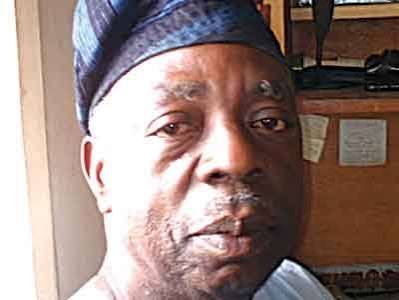
For Oba Gbenga Sonuga, the title “Baba Culture” was not just a moniker—it was a lifetime earned in the vibrant, often chaotic trenches of Nigeria’s arts scene. But if you trace the heartbeat of his legacy, you land on a single, defining year: 1984.
That was the year Lagos State came calling, and Sonuga stepped into the Director’s office at the Lagos State Council for Arts and Culture. For the next decade, he didn’t just occupy the seat; he transformed it. He looked at a council that had been largely reduced to a troupe of dancers performing for government guests and envisioned a cultural powerhouse.
Rolling up his sleeves, he reorganized the institution into fully fledged, breathing departments—Design, Performing Arts, Architecture and Monuments, and Festivals. He gave artists a real home.
This wasn’t just bureaucratic magic; it was the fruit of an unconventional path. After graduating from the University of Ibadan in 1971, Sonuga didn’t chase corporate jobs. Instead, he spent a decade sweating and creating under the legendary architect and artist Demas Nwoko at the New Culture Studios in Ibadan. He also sat at the feet of Nobel Laureate Wole Soyinka, whom he affectionately called “Mon Prof.” That deep, hands-on apprenticeship gave him an empathy for the artist that most administrators lacked. He knew the stage because he had built it.
The turning point of 1984 allowed him to take that hard-earned knowledge global. In 1986, he didn’t just export a play to the United States; he took a piece of Nigeria’s soul with the tour of ORI. Three years later, he moved audiences with SALT, a gripping production he wrote and produced for UNESCO’s World Decade for Cultural Development, performed for one unforgettable night at the National Theatre.
When he finally left the Council in 1994—after clinching the overall first prize at NAFEST—he left behind a golden era that no director has been able to replicate. He went on to found the International Centre for the Arts, Lagos (ICAL), and eventually ascended to the throne as the Fadesewa of Simawa.
For Mufu Onifade, the artist who announced his passing, and countless others, Oba Sonuga was more than a boss or a royal—he was the man who opened the door to the culture sector and held it wide open. At 82, he has quietly taken his final bow, but the stage he built for Nigerian arts remains brightly lit.