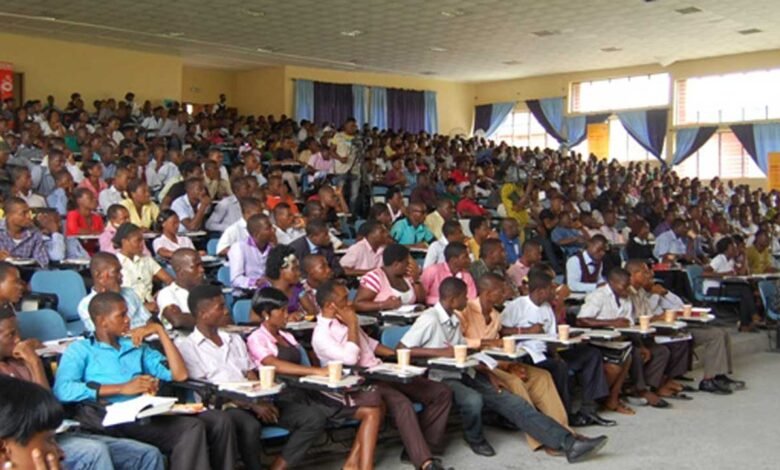
Some Nigerian university students have called for urgent reforms to improve the quality of university education and better prepare graduates for employment.
The students, who spoke in separate interviews, identified poor infrastructure, inadequate practical training, high education costs and limited career preparation as major challenges affecting the country’s university system.
Ewache Nelson, a 100-level Public Administration student at Benue State University, Makurdi, said Nigerian universities had qualified lecturers and capable students but were constrained by inadequate facilities, poor funding and frequent academic disruptions.
He also cited poor internet access, limited accommodation and unreliable electricity as challenges facing students.
Nelson called for increased funding, improved infrastructure and stronger partnerships between universities and industries. He also advocated practical and vocational training, research and innovation, improved teaching methods, internships, entrepreneurship programmes and career guidance.
Ogebe Judge, a 200-level student of the Nigerian University of Technology and Management (NUTM), described the education system as “severely lacking in many aspects,” citing outdated curricula and overcrowding in federal and state universities.
He said the rising cost of living was forcing some students to work while studying, which could affect their academic performance.
Judge called for curriculum reforms, affordable education, more job opportunities, food and transport subsidies, as well as skills and career training.
Mojeed Davies, a 400-level Chemistry student at the University of Lagos (UNILAG), said the system had produced many brilliant graduates who were doing well globally but still had limitations.
Davies called for improved digital infrastructure and a shift from predominantly theoretical teaching to more practical learning.
“We are in the modern era where students spend ridiculous amounts on data in order to get access to free resources that could help their studies online,” he said.
He also stressed the need for students to develop critical thinking, problem-solving and teamwork skills.
Okpalanedu Martha, a 400-level Development and Strategic Communication Studies student at the University of Abuja, cited poor learning environments, inadequate hostel accommodation and the high cost of living.
Martha called for more scholarships, business grants, skills-development opportunities and better conditions for students and lecturers.
She also advocated greater practical exposure, saying her industrial training had helped her understand realities beyond the classroom.
Olorunloju Naomi, a 200-level Mass Communication student of the National Open University of Nigeria (NOUN), called for robust orientation programmes for prospective students before admission.
Naomi said universities provided academic knowledge but needed to do more to equip students with practical skills and career guidance for employment and life after graduation.
The students urged government and university authorities to improve infrastructure, reduce the financial burden on students, strengthen practical learning and expand opportunities for skills development.
They also called for improved career guidance and stronger links between universities and industries to help students gain relevant skills and experience before graduation.