The US House of Representatives on Wednesday approved a sanctions bill aimed at increasing pressure on Russia over its war in Ukraine.
The House voted 262 to 159 in favour of the legislation, which the Senate approved last month. The bill now requires President Donald Trump’s signature to become law.
The legislation was largely spearheaded by the late US Senator Lindsey Graham, with Democratic Senator Richard Blumenthal among its co-authors.
Blumenthal described the House’s approval as a “historic triumph” for democracy in the US and Ukraine.
“I vowed then, as I have every day for the last few years, that our tribute to the fallen defenders of Ukraine will be the passage of this legislation to help bring an end to Putin’s hideous slaughter and prevent future bloodshed,” he said.
Blumenthal also thanked Graham for his “relentless drive” in pushing the legislation.
“So today we celebrate, and tomorrow we redouble work on sending Ukraine whatever it needs to prevail,” he said.
“Putin is a thug who understands only force and strength, which is what we must show clearly and unequivocally,” Blumenthal added.
House Speaker Mike Johnson said the bill would place “maximum pressure” on Russian President Vladimir Putin and the Russian war machine.
“For too long, Putin has bankrolled this devastating war with money and resources from countries willing to look the other way and today that ends.
“This bill sends a powerful message of American unity and gives the administration every tool in the toolbox to help bring this war to a just end and we are proud to send it to the President’s desk,” Johnson said.
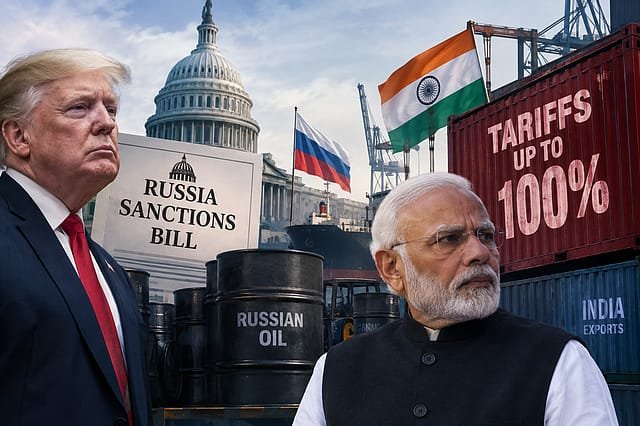
The legislation seeks to target the financing of Russia’s war by imposing sanctions on Russian politicians and companies while further restricting its oil and gas exports.
It authorises Trump to impose tariffs on the five largest buyers of Russian energy resources and on countries helping Russia circumvent energy sanctions.
The measure could further strain US trade relations with China and India, which are major importers of Russian crude oil.
Tariffs could initially reach 100 per cent, with rates adjusted depending on whether countries reduce their reliance on Russian oil and gas. The five largest importers would be reassessed every 180 days.
However, exemptions would apply to countries whose imports account for less than 15 per cent of Russia’s natural gas exports over a 12-month period and which take steps to reduce their purchases.
Blumenthal said in July that Washington’s European allies would not be affected by the measures.