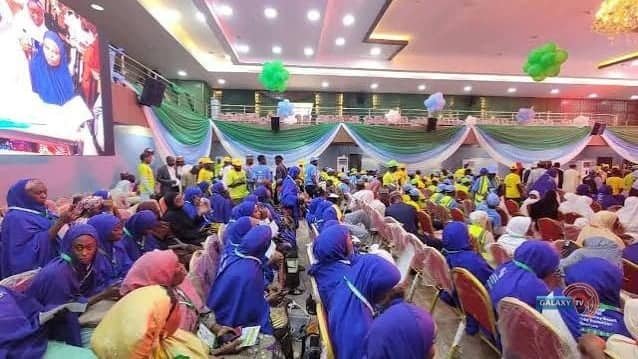
The Zamfara State Government has graduated and certified 710 auxiliary social workers to strengthen child protection and community resilience.
The government also unveiled Family Court Rules and Alternative Care Guidelines for Children to improve community-based protection mechanisms.
The Commissioner for Women Affairs and Social Development, Dr A’isha Anka, disclosed this during the graduation and certification ceremony in Gusau.
Anka described the initiatives as important steps towards improving access to essential social welfare services for women, children and other vulnerable groups across the state.
She commended Gov. Dauda Lawal for rebuilding the state’s social service system, particularly through the settlement of outstanding counterpart funding obligations, which helped restore collaboration with development partners, including UNICEF and UNFPA.
According to her, the renewed partnerships have created opportunities to improve interventions for women and vulnerable children.
The commissioner said improvements to the ministry’s working environment, alongside the recruitment and training of auxiliary social workers, reflected the government’s commitment to strengthening institutional capacity and service delivery.
She appreciated the Ministry for Local Government and Chieftaincy Affairs, UNICEF and the Federal University, Gusau, for their contributions to the training programme.
Anka urged the newly certified social workers to perform their duties with honesty, empathy, confidentiality and professionalism. She stressed that their roles were essential in identifying and supporting vulnerable people and facilitating referrals at the grassroots.
The ministry’s Permanent Secretary, Alhaji Nasiru Galadima, reaffirmed its commitment to supporting the state government’s efforts to improve service delivery.
“This administration is supporting initiatives designed by the ministry with full financial support to meet the needs of our communities,” Galadima said.
The State Coordinator of Auxiliary Social Workers and Director of Child Protection and Development, Farida Abdulrazak, said the workers played a critical role in identifying cases of child abuse and establishing referral mechanisms.
“We are professionally trained in identifying cases of child abuse, neglect and exploitation, but we are adopting preventive methods to ensure that these do not happen through community sensitisation campaigns across our communities and public places,” she said.