Akeem Lasisi
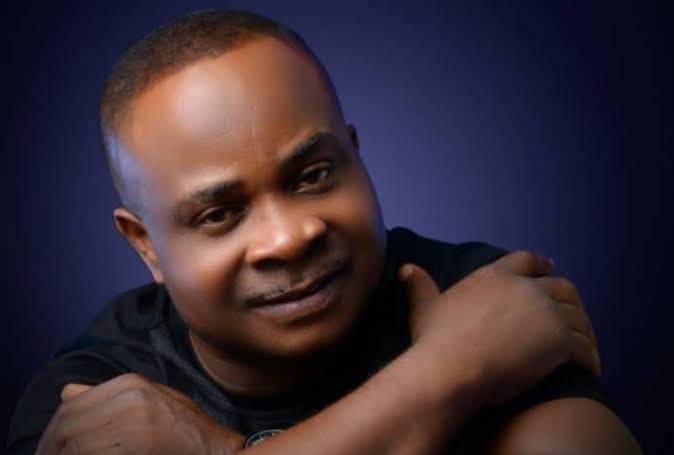
Much of James Eze’s poems had celebrated love the way butterflies do flowers. In his latest offering, Unbind Me Now, however, he is in a fiery mood to fight enemies of sanity and progress he believes are holding the country down. Oozing moody metaphors, he points the muse’s gun at all the angels of all forms of the sleaze in the land.
Even when he spoke on the collection last Wednesday, he could not hide the bitterness and anger that inspired the publication now shortlisted for the 2026 Nigeria Prize for Literature.
“Unbind Me Now is a collection of poems on outrage,” Eze said at a meet-the-press programme organised by NLNG, founder of the durable prize. The two other finalists—Ogaga Ifowodo (Why Does God Need a Gun) and Tares Oburuma (Flora’s Love Colony)—were also present at the event held at the Continental Hotel, Victoria Island, Lagos.
He explained, “I write love. I have written many songs on love; but this time, I felt this is not a time for love based on the state of things in Nigeria today. You cannot be singing lullabies when your country is up in smoke. And so I came out with a language that is not just forceful, but also trenchant, and demanding answers. And I hope that Nigeria will listen, because whether it does or not, I’m fulfilling my destiny. I’m saying the ugly things should not happen.”
He noted that the collection took its spine from Christopher Okigbo’s Labyrinths, where he says, ‘Oh mother Earth, unbind me./ Let this be my last testament…’
“So, when I was conceiving the emotional architecture of Unbind Me Now, this Okigbo’s quote vibrated instantly because I had made up my mind, unlike in my previous works, I was very deliberate about what I wanted to engage,” Eze stated. “This was not one of those situations where the poet waited for inspiration and then took down what the muse communicated. I set out to write this collection with every resolve I’ve got within me.
“So, I wanted to write in the position of someone who has been given the gift of artistic expression, and whose gift must serve not just his people, but mankind. I don’t know if I will be overstating the obvious if I said that people have different gifts. There are people who have gifts of articulation. There are scientists among us. There are people who have travelled to the Moon. Some of us have the gift of using simple words, everyday language, to articulate what might approximate the feelings of a larger population. So, I wanted to write in a representative capacity because I felt that my country was in a bad position—you know, a grave moment in history—when everything we knew began to slip through not just our fingers, but even the memory, because at a point, the absurdities of our daily existence were becoming our regular currency. We couldn’t tell whether we were living fiction or reality. Stories that had seemed strange, things that you had imagined were alien to us, had become the regular currency.
“And that some of us who could write and express ourselves, some of us who have the courage to step out in the public square and speak some uncomfortable truths, should speak now or forever keep silent. So, if you read Unbind Me Now, you’ll encounter angry words, angry poems. You will encounter smoke. You’ll encounter fire.
Because I thought that our situation in Nigeria needed a dose of that. We had hidden behind the finger for too long, and I thought it was time someone spoke out boldly. In any case, I took ownership of our collective truths, our anguish, our pain, and turned them into verses that might serve as, maybe, an interesting compilation of the anger of my people within time and space. Because things might change. Nigeria will not always be like this. But what are we leaving for the people coming after us? It’s when they encounter some of these things that they will know there was a time this country went this bad.”
In terms of style, Unbind Me Now thrives on what its creator called the vocabulary of outrage. Eze said, “Talking about stylistics, I felt I needed a new language because the vocabulary of outrage is different from the vocabulary of love. In romance writing, those tender images would naturally come to you. This time, since my intention was to show extreme anger, I had to actually dig deep. And the challenge there was: are you just showing emotion unrestrained? What redeems each poem, each work?
“So, I was deliberate in constructing the opening and the ending of each poem, in the sense that I wanted a very strong opening; then in the middle, I could play my politics, then I made sure that the ending was restorative, to show that not all hope goes with the motion in the body proper, that there is still hope. In Unbind Me Now, you will see that showing up. After strong emotions, you have to give the reader hope; otherwise, you would just be cataloguing anguish without redemption. So, that is one.
“The other one is, for the first time, I also tried call-and-response in my tribute poems to the human rights community, where I specifically mentioned, you know, even Sowore, Falana, and all these guys, Beko Ransome-Kuti and others. You would notice that, at a point, there was a response, a call-and-response structure, which lends itself easily to performances. If I were to perform it, I would invite the audience. And because of the nature of the poem itself, I needed to make it participatory. I wanted people to take ownership of the work too by inviting them to participate.”
The poet, who added that he also experimented with the Catholic litany, plans to, among other things, invest in programmes and projects that promote literature if he wins the Nigeria Prize for Literature.