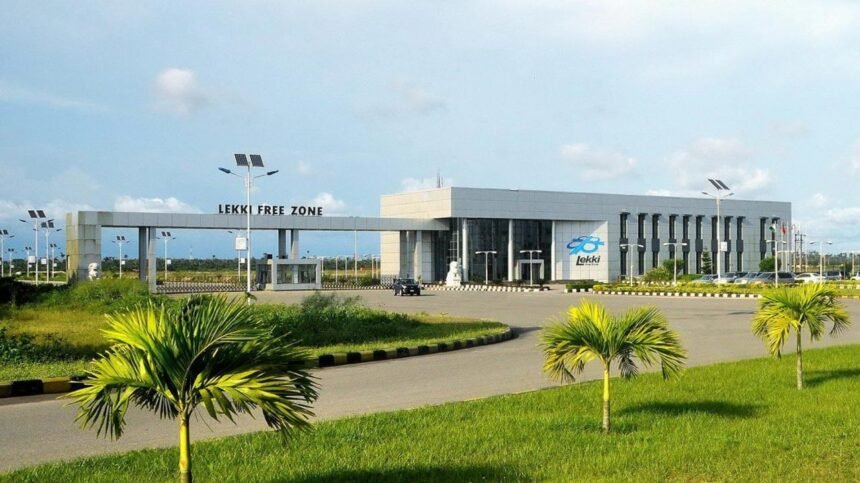
The Sea Empowerment and Research Centre (SEREC) has called for the transformation of Nigeria’s free trade zones into production and export hubs to strengthen the country’s participation in the African market.
SEREC made the call in its policy bulletin titled “From Import Dependence to Production Power”, made available to newsmen on Thursday in Abuja by its Head of Research, Mr Eugene Nweke.
Nweke said Nigeria should treat the African Continental Free Trade Area (AfCFTA) as a platform for industrialisation and market expansion rather than merely another trade agreement.
He said Nigerian businesses needed to move beyond focusing exclusively on domestic consumers and develop products that could compete in markets across Africa.
“The question for Nigerian entrepreneurs should progressively move from how cheaply I can import this product to how competitively I can produce, assemble, process, package or brand this product in Nigeria and sell it across Africa,” he said.
Free trade zones, he said, should not become locations primarily for warehousing, trading, trans shipment or import distribution.
He said their strategic value should be measured through manufacturing, value addition, technology transfer, employment, exports, foreign exchange generation and integration of local supply chains.
“Nigeria has established Free Trade Zones and industrial zones intended to promote investment, manufacturing, employment, technology transfer, export development and economic diversification.
“The challenge is to maximise their productive impact. Free Zones must not become merely sophisticated locations for: warehousing; trading; transshipment; or- import distribution.”
According to him, government should assess free zones based on the volume of goods manufactured, Nigerian value added, Nigerians employed and trained, technology transferred and the number of African markets served.
He said Nigeria possessed entrepreneurial and industrial capabilities across clusters in Aba, Nnewi, Onitsha, Lagos and Kano, as well as in several other states.
“The task is to connect these clusters to Finance, Energy, Technology, Standards, Logistics, AfCFTA and Export Markets. Nigeria does not need to reinvent entrepreneurship. It needs to industrialise the entrepreneurship it already possesses,” he said.
The SEREC official also called for a transformation in the freight-forwarding and customs-brokerage professions to support manufacturing and export-led growth.
He said freight forwarders should develop expertise in export documentation, AfCFTA procedures, rules of origin, multimodal transport, free zone logistics, bonded warehousing and cross-border distribution.
Nweke urged manufacturers to consider the domestic market as their first market rather than their final destination.
Businesses, he said, should examine opportunities to sell Nigerian products in Ghana, Côte d’Ivoire, Senegal, Cameroon, Kenya, Rwanda and South Africa, subject to relevant market requirements.
He called for a coordinated national strategy linking industrial policy, AfCFTA, free zones, customs modernisation, port efficiency, trade facilitation, local content and export development.
Nweke also urged government to improve energy supply, industrial finance, product standards, export infrastructure and support for businesses seeking access to African markets.
He said responsible foreign investment should encourage local employment, technology transfer, value addition and export-oriented production.
“Nigeria’s challenge is bigger than a foreigners-versus-Nigerians narrative. The real challenge is competitiveness,” he said.
He urged stakeholders to work towards shifting the country from consumption to production, importing to assembling, trading to branding and domestic market dependence to export competitiveness.