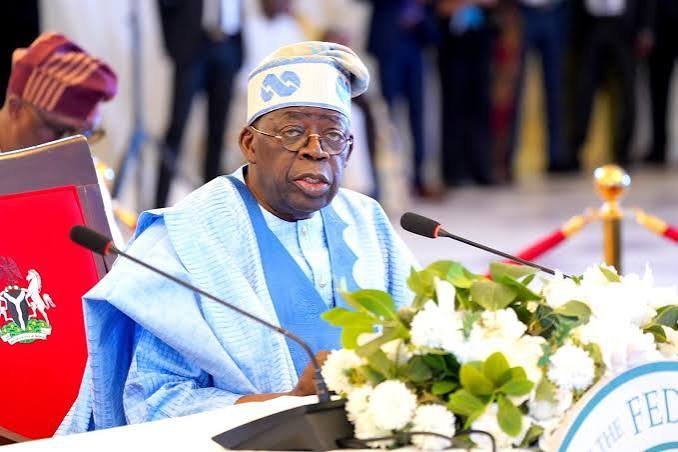
President Bola Tinubu has said Northern Nigeria remains the primary beneficiary of his administration’s economic reforms, maintaining that the removal of fuel subsidies rescued the country from severe fiscal distress and redirected public funds towards critical infrastructure and productive sectors.
The President’s position was presented by the National Chairman of the All Progressives Congress (APC), Nentawe Yilwatda, who represented Tinubu on Tuesday at the second edition of the Policy Roundtable organised by the APC Professionals Forum in Abuja, titled “The Asiwaju Scorecard Series.”
Restating his administration’s economic trajectory, Tinubu highlighted key macroeconomic indicators, noting that gross external reserves had reached approximately $52.7 billion by August 2026, while real Gross Domestic Product (GDP) grew by 4.43 per cent in the second quarter of 2026 as inflation moderated towards 15.4 per cent.
Linking these developments to the administration’s $1 trillion economy target by 2030, the President highlighted major infrastructure projects, including the Sokoto-Badagry Super Highway, the Lagos-Kano rail corridor and the Ajaokuta-Kaduna-Kano (AKK) gas pipeline project, as transformative assets for the region.
“The biggest beneficiaries of this economy will be the Northern part of Nigeria, because they will now be trading with countries, trading with Niger, trading with Chad, trading with Burkina Faso, trading with Southern Sudan, trading with Northern Cameroon, trading with Central African Republic… The North is the next business destination of Nigeria,” the President stated.
The claim, however, drew mixed reactions from prominent regional organisations.
The Arewa Consultative Forum (ACF) and the Middle Belt Forum (MBF) rejected the assessment, arguing that the economic policies had exacerbated poverty, inflation and living costs across Northern communities.
Conversely, the Northern Christian Association of Nigeria (CAN) endorsed the administration’s progress, maintaining that Tinubu’s structural reforms and infrastructure distribution represented a clear improvement over previous administrations.
Addressing campaign proposals ahead of the 2027 general elections, the APC leadership also criticised opposition pledges, including statements by African Democratic Congress (ADC) presidential candidate Atiku Abubakar, to reinstate fuel subsidies.
Dr Isa Yuguda, Chairman of the Board of Trustees of the APC Professionals Forum, warned that returning to the former subsidy framework could revive systemic financial leakages and undermine the fiscal foundation currently funding national student loans, border security and regional transport infrastructure.