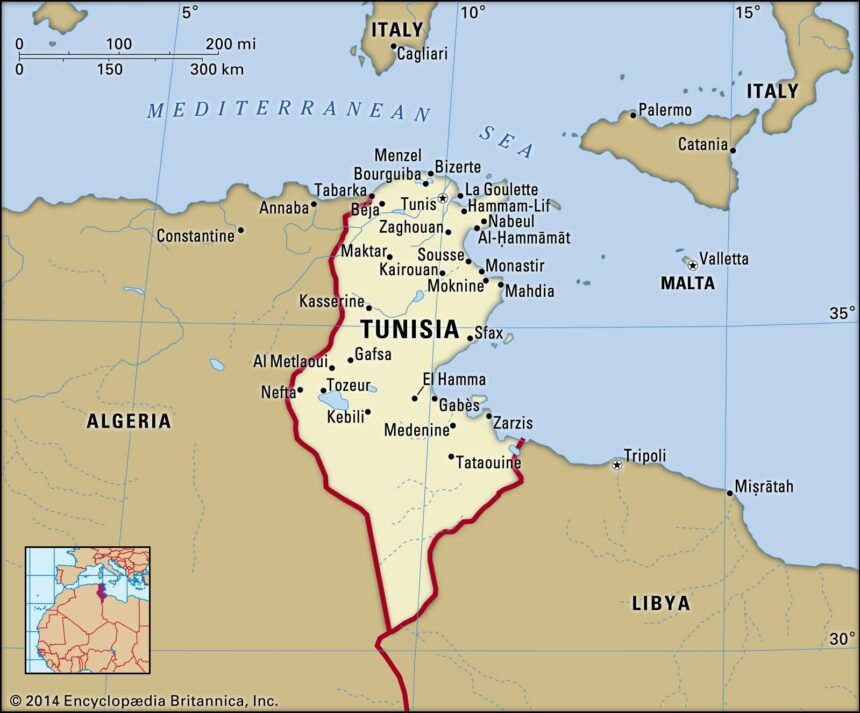
Members of Tunisia’s Assembly of People’s Representatives have proposed legislation that would impose a nationwide ban on single-use plastic bags and require a transition to environmentally friendly alternatives.
The proposed law is aimed at tackling plastic pollution, protecting public health and supporting the country’s transition to a circular economy.
Under the bill, the sale or distribution of single-use plastic bags at shop checkouts would be prohibited if the legislation is passed.
The proposal also provides for a transition period of not more than one year, after which manufacturers and importers would be required to stop the production, importation and distribution of such bags.
During the same period, the use of plastic packaging for food products and goods sold by weight would also be gradually phased out.
The bill outlines strict technical standards for alternative products.
Only reusable bags with a minimum thickness of 50 microns, capable of carrying up to 10 kilogrammes and designed for at least 20 cycles of use, would be permitted.
Biodegradable bags would also be allowed, provided they degrade by at least 90 per cent within six months under industrial conditions or within 12 months under domestic conditions without producing microplastics.
The lawmakers further proposed a national industrial support programme to help manufacturers convert production lines to environmentally friendly products.
The programme would include subsidised loans and tax incentives to support the transition.
In addition, the bill incorporates the principle of Extended Producer Responsibility (EPR), requiring companies to assume financial and environmental responsibility for their products.
The proposed legislation also prescribes penalties for violations, including fines and the confiscation of prohibited products.
For repeat offences, fines would be doubled and businesses could face closure, while criminal liability would apply to the illegal production or importation of banned plastic bags.