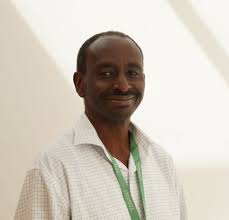
The Chief Executive of Malaria Consortium, Dr James Tibenderana, says Nigeria has
made huge progress in reducing malaria prevalence but a huge number of the population still at risk of the disease.
Tibenderana said this on Wednesday in Abuja during a media conference to mark the NGO’s 20th anniversary of contributions to global health.
Established in 2003, Malaria Consortium is one of the world’s leading non-profit organisations involved in the prevention, control and treatment
of malaria and other communicable diseases among vulnerable populations.
The chief executive, therefore, said “even though Nigeria has made huge progress in the reduction of malaria prevalence, the nation still
carries a burden which reflects on transmission dynamics.
“Every single state in Nigeria is at risk of malaria; 97 per cent of the population is at risk of malaria; it is important to appreciate that.
“It is also important to appreciate that with the next interventions that are being deployed such as insecticide treated nets, indoor residual
spraying, testing, rapid diagnostic tests and all, we are getting the right treatment.
“However, we are not achieving optimal coverage of these tools.”
Tibenderana said that the World Health Organisation (WHO) estimated in its last World Malaria Report that Nigeria accounts for 184,000 malaria deaths per annum.
He added that “it means 22 Nigerians would have died of malaria and about 530 would have fallen sick within one hour. This number was, however, larger 10 years ago,
so, there has been some progress.
“But what has happened is that the mosquito and the parasite has had to adapt to the huge coverage that we have achieved in many countries. It is
important that we understand that the mosquito or the parasites do not remain the same. They respond to what is going on in the environment.“Sometimes environment.“Sometimes, they are synergistic. In other words, the combined effect is greater than if you deploy them singly.
“So, for Nigeria to derive the optimal impact of these interventions, coverage needs to be high, use needs to be consistent and we all need to be
involved in this struggle to free Nigeria from malaria.”
The group’s Country Director in Nigeria, Dr Kolawole Maxwell, said the organisation had secured 200 million dollars for ongoing malaria projects in
the country from 2020 to 2026.
He added that presently, the Seasonal Malaria Chemoprevention is ongoing in Abuja, and that every year it happens in 13 states of the nation
where its services are carried out.
“We are covering close to 20 million Nigerians; we go from house to house to ensure that children are treated and prevented from having
malaria and of course dying from malaria.
“So, indeed we are celebrating 20 years of good partnership, prevention of Nigerian children from dying, working with government and
partners.”
Maxwell, however, said there is need to bring issues around new tools for malaria prevention and treatment to the fore.
He said “there is also the need to fast-track the elimination of malaria in Nigeria, where there is the highest burden of disease and
to seek continuous collaboration to apply the latest evidence.”
The News Agency of Nigeria (NAN) reports that Malaria Consortium has a mandate on maternal and child health, using malaria
as entry point to bring technical and managerial support to the health system in Asia and Africa.
It started operations in Nigeria in 2008 and has reached vulnerable population of mainly women and children with prevention and
treatment of malaria and other communicable diseases in 22 states and the FCT at different times.