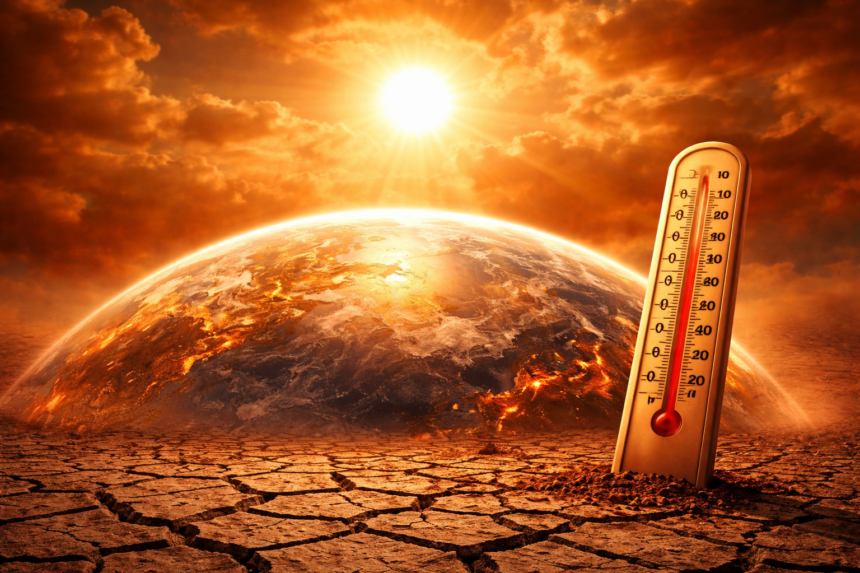
The world is on track to record 2026 as the second-hottest year in history, driven by human-induced climate change and supercharged by an exceptionally strong El Niño weather pattern.
In its monthly bulletin, the EU’s Copernicus Climate Change Service reported that 2026 maintains a 20 percent chance of tying or exceeding 2024, which currently stands as the warmest year on record. Global temperatures are now considered virtually certain to surpass 1.5°C above pre-industrial levels throughout 2026. Additionally, the four-year average spanning from 2023 to 2026 is projected to breach the 1.5°C threshold—the vital limit established under the Paris Agreement to ward off the most severe consequences of global warming.
The findings indicate that the planet experienced its warmest October on record, with average global surface air temperatures resting 1.75°C above the 1850–1900 pre-industrial benchmark. It marked the third consecutive month that global temperature anomalies exceeded 1.5°C.
Samantha Burgess, strategic lead for climate at the European Centre for Medium-Range Weather Forecasts, stated that October continued the pattern of remarkable global warmth alongside record ocean temperatures. She noted that the exceptionally strong El Niño is adding further heat to a climate already warmed by human activities.
The updated climate data arrives as international delegates converge in Turkey for the United Nations’ COP31 climate summit, following a year marked globally by devastating floods in Nepal, intense European heatwaves, and severe wildfires in Indonesia.
Global meteorological forecasters have warned for months that the current El Niño cycle—expected to peak later this year—could shape up to be the strongest ever observed. Recently, the intensifying climatic phenomenon set an all-time temperature record within a critical zone of the Pacific Ocean.
While El Niño is a natural climate cycle that temporarily elevates tropical Pacific sea temperatures, its interplay with anthropogenic global warming significantly amplifies the risk of extreme weather events, ranging from prolonged droughts to catastrophic flooding. Forecasters project that the lingering effects of the weather pattern could potentially propel 2027 to become the hottest year on record.
Although international treaties negotiated during the 2015 Paris climate talks aimed to restrict global warming to 1.5°C, United Nations declarations indicate that this long-term threshold will likely be breached within a matter of years, underscoring the urgent imperative for aggressive global reductions in greenhouse gas emissions.