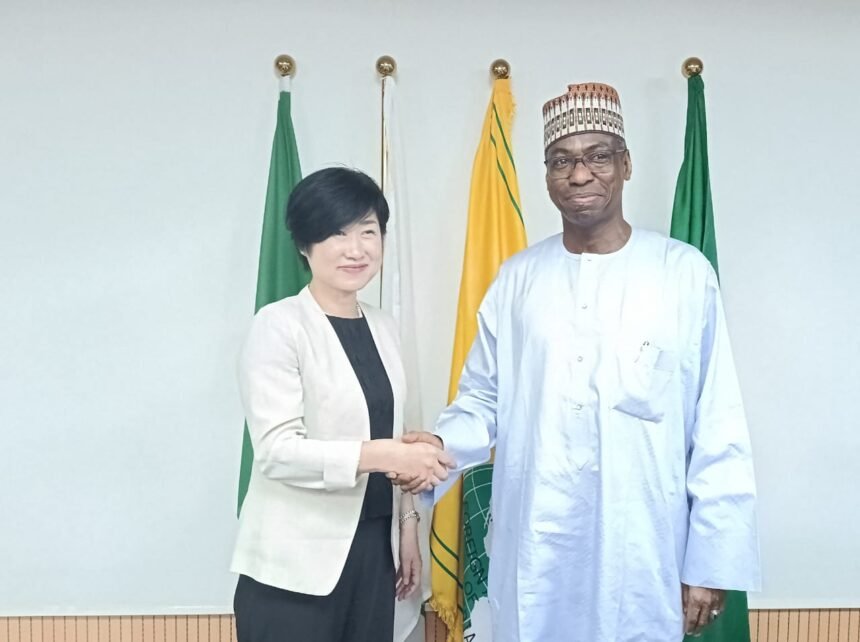
Nigeria and Japan have agreed to strengthen economic cooperation through increased investment, industrial development, technology transfer and energy collaboration to drive sustainable growth.
Nigeria’s Minister of Foreign Affairs, Amb. Bianca Odumegwu-Ojukwu, disclosed this during a bilateral meeting with Japan’s Ambassador to Nigeria, Suzuki Hideo, in Abuja on Tuesday, as both countries marked 66 years of diplomatic relations.
The minister reaffirmed Nigeria’s commitment to a strategic and mutually beneficial partnership with Japan, building on its longstanding development assistance. She called for stronger efforts to translate existing bilateral agreements into tangible economic and development outcomes.
She emphasised the need to implement the outcomes of the 10th Nigeria-Japan Special Partnership Forum held in Abuja on Aug. 27, 2026, through concrete programmes, investment commitments and regular consultations between the foreign affairs ministries of both countries.
Odumegwu-Ojukwu also called for stronger partnerships between Nigerian and Japanese companies through joint ventures, local content development, skills transfer and integration into Japanese supply chains.
She encouraged greater involvement of the Japan External Trade Organisation (JETRO) in connecting investors with credible Nigerian businesses and public-sector partners.
On energy cooperation, the minister welcomed Japan’s interest in developing resilient energy and critical mineral supply chains. She highlighted opportunities for investment in solid minerals, gas development, cleaner energy technologies and industrial decarbonisation.
She also acknowledged Japan’s development support through the Japan International Cooperation Agency (JICA) in infrastructure, healthcare, agriculture, education and technical training.
According to her, Nigeria welcomed a JICA-supported $10 million initiative aimed at strengthening the country’s start-up ecosystem through catalytic capital and institutional development, in partnership with the Nigeria Sovereign Investment Authority.
On regional security, Odumegwu-Ojukwu recognised Japan’s contributions to peacebuilding, humanitarian assistance and stabilisation efforts in Nigeria and West Africa.
She reaffirmed Nigeria’s commitment to regional stability through the African Union and the Economic Community of West African States (ECOWAS), while encouraging Japan to sustain its support for African-led peace and development initiatives.
Regarding consular affairs, the minister stressed the importance of continued dialogue on visa-related challenges and practical measures to facilitate legitimate travel for businesspeople, students, researchers, government officials and tourists.
She also identified a Nigeria-Japan Industrial and Investment Hub as a key initiative for promoting business partnerships, technology transfer, industrial growth and access to the wider African market. She requested the Japanese Embassy’s assistance in developing a practical roadmap for its implementation.
For his part, Suzuki reaffirmed Japan’s interest in deepening bilateral cooperation with Nigeria, describing the partnership as strategic for the country, which he referred to as Africa’s giant. He also assured the minister that visa-related issues would be addressed expeditiously.