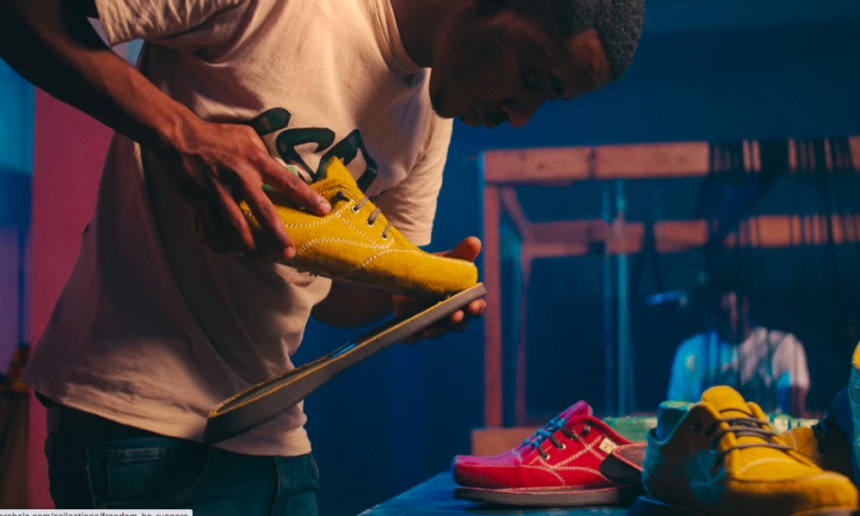
Some graduates in Pankshin Local Government Area of Plateau State have turned to shoemaking instead of waiting for white-collar jobs, while also training other young entrepreneurs.
Mr Pius Manji, a graduate of Business Education from the University of Jos, said he chose shoemaking as a career because government could not provide jobs for everyone.
“I have no regrets about my choice of career because with my Bachelor of Education (B.Ed) in Business Education, University of Jos, I cannot keep waiting for government to provide a job.
“This is an academic environment, and I know how students care about fashion, so I chose shoemaking as a career.
“I carved a niche in shoemaking because everybody cannot afford to buy a car, motorcycle, or bicycle.
“However, everybody wears shoes, unless the person is sick or physically challenged” he said.
Manji said the business had been profitable, enabling him to acquire two plots of land within six years. He said his footwear sold for between N5,000 and N30,000, depending on the quality and type.
“I sell 2 to 3 pairs a day, sometimes more. I also supplied shoes both within and outside the state,” Manji said.
He said he had trained more than 40 young people since starting the business and currently had 14 registered apprentices.
Manji, however, identified inadequate machinery, limited shop space and difficulty sourcing materials as challenges affecting his ability to meet customer demand.
Similarly, Mr Amos Joshua, a graduate of Plateau State Polytechnic with a Higher National Diploma (HND) in Public Administration, said he went into shoemaking immediately after graduation to become self-employed.
He said the business required little start-up capital and space, adding that he initially made shoes at home and displayed them in a friend’s shop.
Joshua said his footwear sold for between N6,000 and N20,000 or more, depending on customers’ preferences. During peak periods, he supplied up to 40 to 50 pairs, while he currently sells about three to four pairs daily.
“I have been doing this business for the past nine years. This is my family’s major source of income.
“Through this business, I am currently training my younger sister in university, bought 3 plots of land, and hope to start developing one of them soon,” he explained.
Joshua said he had 10 apprentices under his care and was determined to train more young people to reduce overdependence on white-collar jobs.
He, however, said limited shop space remained a major challenge, preventing him from admitting more apprentices.
He said: “just look at the shop; it is not big enough to admit more apprentices. Some parents brought their children, who are not academically sound, to learn a trade, but I can’t admit them”.