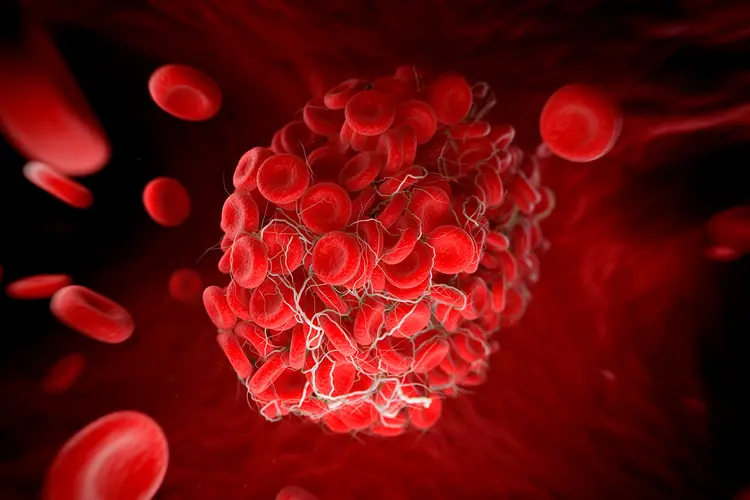
A public health haematologist, Prof. Theresa Nwagha, has identified blood clots, also known as Venous Thromboembolism (VTE), as a major cause of sudden deaths globally.
Nwagha made the statement on Thursday in Enugu while delivering the 252nd Inaugural Lecture of the University of Nigeria, Nsukka (UNN), titled “The Balance of Blood Fluidity: From Bleeding to Clotting in Health and Disease.”
She explained that VTE occurs when blood clots form in the veins and obstruct normal blood flow, adding that about 10 million cases occur globally each year, resulting in approximately two million deaths.
The blood specialist said blood clots could affect both sick and apparently healthy people, sometimes leading to sudden death.
According to her, 25 per cent of the time, blood clots present no symptoms.
Nwagha listed risk factors for VTE to include prolonged sitting, obesity, stress and long-distance journeys lasting more than four hours.
She stressed the need for regular assessment of thrombosis risks to prevent sudden deaths popularly known as “Fall and Die.”
She explained that sitting for long periods, especially while working on computers, could cause blood to stagnate in the lower legs, increasing the risk of clot formation.
She added that blood clots could sometimes be mistaken for muscle injuries, exercise-induced asthma or ordinary fatigue.
The professor called for hospital-wide risk assessments and preventive treatment, known as thromboprophylaxis, to reduce cases of VTE.
She also advocated integrating VTE awareness and early identification into primary healthcare.
Nwagha said low public awareness, gaps in medical training and the migration of healthcare professionals, popularly known as “Japa syndrome,” had affected efforts to improve VTE management.
She said these challenges contributed to the establishment of the UNTH Anticoagulation Steward Committee by the University of Nigeria Teaching Hospital.
“We want to convert anticoagulation from a fearfully understood clinical hazard into a highly disciplined standard life-saving medical act,” she said.
The professor also highlighted the importance of multidisciplinary care for women, particularly during pregnancy and other reproductive health conditions where blood clotting could pose serious risks.
According to her, proper teamwork among healthcare professionals could improve outcomes for women at risk.
“Women on oral contraceptive, IVF, high doses of oesterogene and even athletes are at risk of thrombosis,” she said.
Nwagha further discussed the use of digital health and Artificial Intelligence (AI) to improve VTE risk assessment and provide more precise care.
Earlier, the Vice-Chancellor, Prof. Simon Ortuanya, represented by Prof. J.U.J. Onwumere, congratulated Nwagha on the inaugural lecture and encouraged her to conduct further research in haematology and coagulation.
Dignitaries at the event, including former Minister of Power, Prof. Chinedu Nebo, as well as family members and friends, commended the haematologist for her contributions to safeguarding public health in the country.