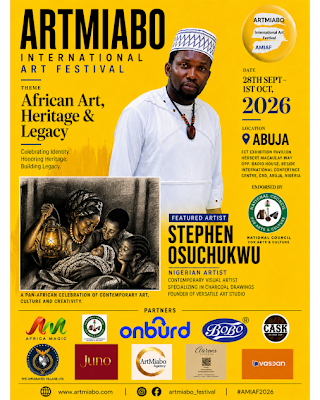
The fifth edition of the ArtMiabo International Art Festival has opened in Abuja, bringing together art enthusiasts and stakeholders in the culture and creative sector.
The four-day festival, themed “African Art: Heritage and Legacy,” opened on Monday at the FCT Exhibition Pavilion and will run until Oct. 1.
The festival features contemporary artworks exploring African heritage, identity, culture and history.
The opening night featured live music as guests and art enthusiasts viewed artworks and interacted with participating artists, who explained the ideas, stories and techniques behind their works.
Speaking at the opening, the festival’s convener, Miabo Enyadike, said the exhibition was designed to create opportunities for artists to connect with collectors, government officials, embassies and other institutions.
“We want to position artists before high-profile institutions, collectors, embassies and government officials. We want them to have access to the people and organisations that can support their work and help them grow,” she said.
Enyadike said the festival also sought to raise awareness about preserving and restoring artworks that form part of Nigeria’s cultural heritage.
“These works are part of our heritage, and if we do not preserve them, future generations may not have access to them,” she said.
She said the fifth edition focused on heritage, legacy and the role of art in preserving African history.
“This year, we are looking at African art, heritage and legacy because we want to remind people that art is not only about aesthetics. It carries our stories, our identity and our history,” Enyadike said.
One of the participating artists, Udie Undie, said his works explored the human mind and sociological issues through paintings and upcycled materials.
Undie, who was participating in the festival for the first time, said his colourful works were intended to help viewers find balance amid the challenges of everyday life.
“My works are like escapism. Escapism isn’t a bad thing. You’re not running away. It’s a way of balancing reality, making reality bearable for you,” he said.
He also stressed the importance of documenting artworks to establish their authenticity and provenance, urging artists to preserve records of their creative processes, including sketches and other documentation.
Another visual artist, Fridausi Garba, said her works focused on culture, history and people who lived before the present generation.
Garba, who works mainly with oil and acrylic, said one of her works explored the story of Queen Amina of Zazzau, particularly the courage and resilience associated with the historical figure.
She said artworks could help preserve historical narratives, especially where photographic records of historical figures were unavailable.
Favour Enumah, a mixed-media artist, said her works explored identity, heritage, culture and intangible experiences passed from one generation to another.
“I am interested in giving form to the things we cannot always see but shape who we are, such as memory, culture, identity and inherited experiences,” she said.
Enumah said artists needed to document their works and explore copyright protection to guard against unauthorised reproduction.
She said she hoped to gain visibility, new connections and opportunities to advance her career through the festival.
Deolu Femi, a contemporary paper artist based in Lagos, said his works were inspired by paper’s ability to preserve memories and experiences.
He said he used layers of paper to represent the different elements that made up human memories and experiences.
“Each layer in my work is like a breakdown of the scenes that make up an experience or a memory,” he said.
Femi called for greater institutional support for the preservation of artworks, including appropriate storage facilities.
He also urged government intervention to address challenges associated with transporting artworks, particularly across African borders.
Femi said high logistics costs could discourage international sales and limit the participation of Nigerian artists in the global art market.
He, however, said Nigerian art was increasingly gaining international recognition and that artists could compete globally when the necessary structures were put in place.
The festival also features the Nigeria Art Legacy Forum, workshops and masterclasses, live art and cultural performances, as well as artisanal food and drinks.