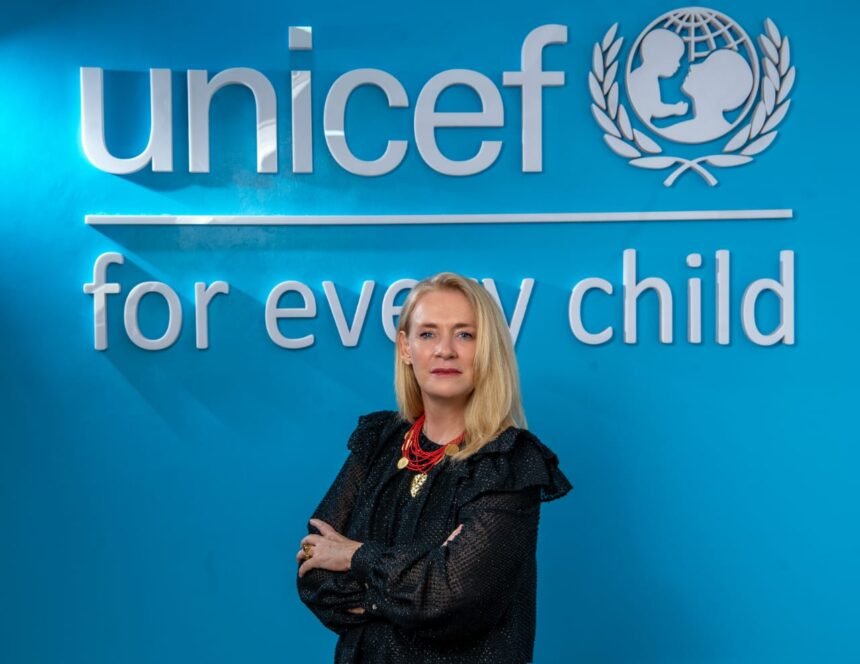
The United Nations Children’s Fund (UNICEF) has described birth registration as a child’s first and most fundamental right, saying it provides access to education, healthcare, social protection and other lifelong opportunities.
UNICEF Chief of Lagos Field Office, Celine Lafoucriere, said this on Tuesday in Lagos at a two-day media dialogue on birth registration organised in collaboration with the National Population Commission (NPC).
Lafoucriere said civil registration provided the legal identity needed for a child to be recognised by the state.
“Civil registration is the child’s identity, and it is the foundational right of every child.
“Without that right, nothing else can happen. A child cannot go to school without an identity,” she said.
She said birth registration also enabled children to access health services and, later in life, exercise rights such as voting, owning property and inheriting wealth.
Lafoucriere said registration was also important for national planning and social protection, noting that unregistered children were often excluded from government budgets and social registers.
“We are working with the Government of Nigeria to build a credible social register that will be used to deliver benefits to vulnerable families.
“If a child doesn’t have an identity, he or she does not exist on the social register,” she said.
She urged journalists to help parents understand the importance of birth registration and where to access the service, including Primary Healthcare Centres (PHCs) and community registration points.
Earlier, the Lagos State Director of NPC, Sherifdeen Kekere-Ekun, said the workshop was aimed at increasing awareness and correcting misconceptions about birth registration.
He urged journalists to use news reports, radio and television programmes, features and social media campaigns to educate the public, adding that the media could also help hold government and communities accountable for improving birth registration.