Oyindamola Ogunbowale
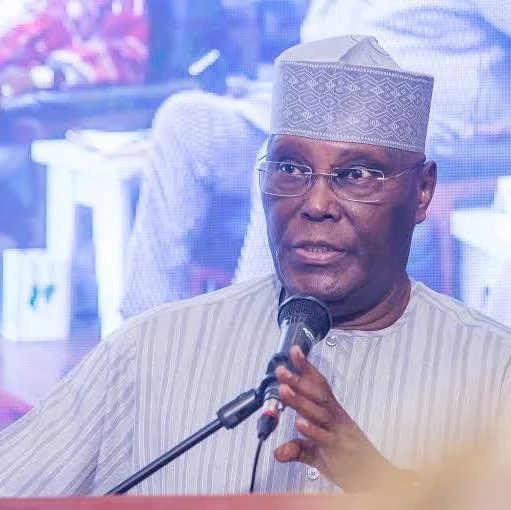
The African Democratic Congress (ADC) presidential candidate, Atiku Abubakar, has reaffirmed that he would restore fuel subsidy if elected, rejecting suggestions that his position has changed.
As the fuel subsidy debate returned to Nigeria’s 2027 political conversation, the former Vice-President made it clear that he would take a different economic path from President Bola Tinubu if elected.
“On the question of subsidy, my position has not changed and will not change: I will restore it!” Atiku said, arguing that Nigeria has enough resources to protect citizens from hardship.
“A nation as blessed as ours has no business abandoning its citizens to hardship. Nigeria is rich enough to look after her own,” he added.
Atiku said his proposal is intended to restore purchasing power amid rising transportation, food and household costs.
“I want wages to have value again.
I want farmers to move produce without transport swallowing their profits.
I want families to fill their baskets without emptying their pockets. I want businesses to produce, employ and prosper,” he said.
A targeted subsidy could provide immediate relief by lowering petrol costs for eligible consumers, reducing transport fares and easing the cost of moving food and other goods.
It could also help protect low-income households, farmers and small businesses from further erosion of their purchasing power.
If linked to domestic refining, the policy could support local production and reduce exposure to international fuel-price shocks and foreign-exchange pressures. However, the proposal would also carry significant fiscal risks.
Even a capped subsidy could require substantial public funding if petrol consumption remains high or global oil prices rise.
The cost could divert money from healthcare, education, infrastructure and social protection.
It could also widen budget deficits, increase borrowing and recreate incentives for smuggling, overconsumption and fuel diversion if prices differ sharply across neighbouring countries.
The effectiveness of the policy would depend on how narrowly “targeted” is defined and how the government verifies beneficiaries.
A broad price subsidy could benefit wealthier households that consume more fuel, while a narrowly targeted scheme could exclude vulnerable people who lack access to formal identification, banking services or public transport.
Accurate consumption data, transparent eligibility rules and reliable payment systems would therefore be essential.
Implementation would also require strong monitoring of fuel volumes, import costs, refinery output and distribution networks.
Without independent audits and public disclosure of subsidy payments, the programme could become vulnerable to inflated claims, diversion and corruption.
Linking support to domestic refining could reduce some risks, but local refineries would need sufficient capacity, reliable crude supply, competitive pricing and effective regulation.
His position contrasts with President Bola Tinubu’s decision to remove the petrol subsidy on May 29, 2023, declaring that “fuel subsidy is gone.”
The policy pushed petrol prices higher and increased transportation, food, production and household costs. The Federal Government has defended the removal as necessary to eliminate a costly subsidy regime, strengthen public finances and place the economy on a more sustainable footing.
Atiku, however, argues that economic progress should also be measured by whether ordinary Nigerians can afford basic goods and services.
His camp says the proposed subsidy would be targeted, capped and linked to domestic production and refining, rather than a return to the previous import-driven system.
For the proposal to be credible, it would need clear spending limits, a defined duration, regular reviews and safeguards to ensure that benefits reach consumers rather than intermediaries.
The issue is therefore shaping two competing economic narratives ahead of 2027: Tinubu’s argument that Nigerians must endure short-term pain for long-term reform, and Atiku’s promise to use targeted intervention to make life more affordable.
The central question will be whether a targeted subsidy can deliver immediate relief without recreating the fiscal burden, market distortions and governance problems associated with the former system.