An economist, Muhammad Sagir has advocated entrepreneurial training for beneficiaries of Jigawa mass wedding programme, to enable them to build better homes.
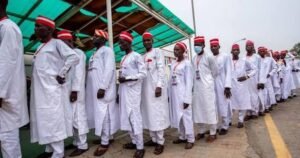
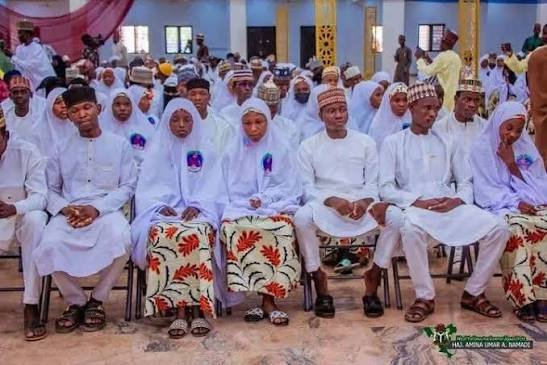
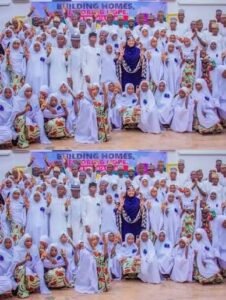
It will be recalled that the Jigawa government has recently hosted mass weddings for 300 indigent couples.
Sagir, who spoke in an interview with the News Agency of Nigeria (NAN), on Saturday in Dutse, urged organisers of the programme to prioritise skills development over monetary support.
He underscored the importance of empowering the newly wed couples with skills, to provide them with a mean of livelihood to cater for their needs.
The expert said that the beneficiaries should also be provided with vocational tools such as sewing, grinding and knitting machines, as well as training in income-generating skills to guarantee sustainable livelihoods.
“The beneficiaries of the mass wedding should be enrolled in the government’s skills acquisition programme, to enable them to learn trades and engage in productive activities.
“It is imperative for both husband and wife to benefit equally from such empowerment initiatives, to ensure the longevity of the marriage.
“If you assess many of the beneficiaries a few months after the weddings, you may discover that the money given to them were spent on immediate needs, rather than establishing viable businesses,” he said.
Also, Dr Fa’izu Bashir, Commander General, Jigawa State Hisba Commission, said the mass wedding programme was being implemented by the office of the Wife of the Governor, Amina Namadi.
He said the commission was mandated to coordinate, screen and select indigent lovers to participate in the programme.
Bashir said the commission adopted rigorous screening methods, to ensure stability, endurance and longevity of the marriages.
He said that the commission received about 600 requests from people who initially expressed interest to participate in the programme, and selected 300 applicants. comprising 150 males and 150 females.
The screening exercise, he said, was designed to ensure that only individuals genuinely committed to marriage, rather than those seeking material or financial benefits, participated in the programme.
“We thoroughly screened the participants to ensure that nobody joined the programme solely to benefit from the financial and material support attached to it.
“One of the major criteria is that the groom must be an orphan, and have a genuine partner with whom he has a relationship, and both must be willing and ready to marry.
“We also ensured that the health status of the participants, particularly their HIV status, is satisfactory,” he said.
Bashir said that the measure would guarantee the long-term success of the marriages, and avoid experiences where some unions collapsed due to conspiracies between the couples.
He said that the commission organised premarital counselling sessions for the couples, and advised them to embrace patience, mutual understanding and commitment as essential ingredients for a successful marriage.
The commander said that each of the couples were provided with a set household furniture, and a N40,000 token to assist them in settling into family life.
“It is not intended as an economic empowerment package but simply to assist the couples as they begin their new homes,” he said.
One of the beneficiaries, Salisu Musa, lauded the initiative, adding that he gave his N20,000 to the bride, to enable her to engage in productive activities.
He said that such support would promote self-reliance, contribute to peace and development at the grassroots.