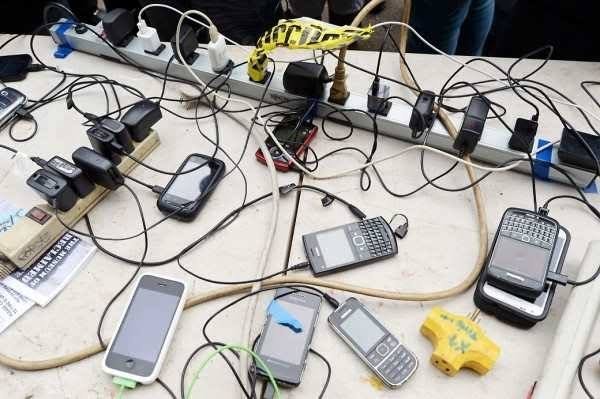
Commercial phone charging businesses are thriving in Maisanya Village, Yankwashi Local Government Area of Jigawa State, as residents increasingly rely on the services due to persistent electricity shortages.
A visit to the community on Wednesday showed that many residents depend on charging centres powered by generators and solar energy to keep their mobile phones functional amid unreliable public power supply.
The growing dependence on mobile phones for communication, financial transactions and access to information has boosted demand for the services, creating a steady source of income for operators.
A phone charging business owner, Mamman Sani, described the trade as profitable because of the high number of customers.
He said many residents patronise the charging centre because they cannot reliably charge their phones at home.
“We depend heavily on mobile phones to stay in touch with relatives, conduct businesses and financial transactions, making regular access to charging services essential.
“Many people come here every day because they cannot charge their phones at home. Sometimes they leave their phones with me in the morning and return later to collect them.
“The demand is higher during periods of prolonged power outages. I charge different types of phones, and ensure they are safely kept until their owners return,” he said.
Sani said the business remained a viable source of livelihood despite the rising cost of fuel used to power his generator.
He appealed to relevant authorities to improve electricity supply in rural communities to reduce operating costs and improve residents’ quality of life.
A resident, Musa Tsalha, described access to phone charging services as a necessity rather than a luxury.
“Most of us use our phones to communicate with family members, receive important messages and carry out banking transactions.
“Without these charging shops, we will find it difficult to keep our phones on due to erratic electricity supply,” he said.
Other residents, Ranau Isuhu and Muddafa Auwalu, said visiting charging centres had become part of their daily routine.
Isuhu said the services save residents the time and cost of travelling long distances in search of electricity.
“We patronise phone charging businesses because it saves us time and transport costs. With stable electricity supply, we will not need to depend on them,” he said.
Auwalu noted that the increasing use of smartphones had further driven demand for charging services.
He said students, traders and farmers rely on their phones for communication, market information and access to knowledge, making regular charging essential.
He urged the government to invest more in rural electrification projects to improve access to electricity and promote socio-economic development.
Another resident, Mati Isa, said reliable electricity would boost businesses and improve access to digital services in rural communities.
He observed that while commercial charging centres currently fill an important gap, improved electricity supply would enable residents to operate small businesses more efficiently and reduce dependence on generators.
Isa expressed optimism that expanded rural electrification would improve living standards and stimulate economic activities in communities such as Maisanya.
“Until reliable electricity reaches the community, commercial phone charging centres will continue to play a vital role in supporting communication and livelihoods.”