

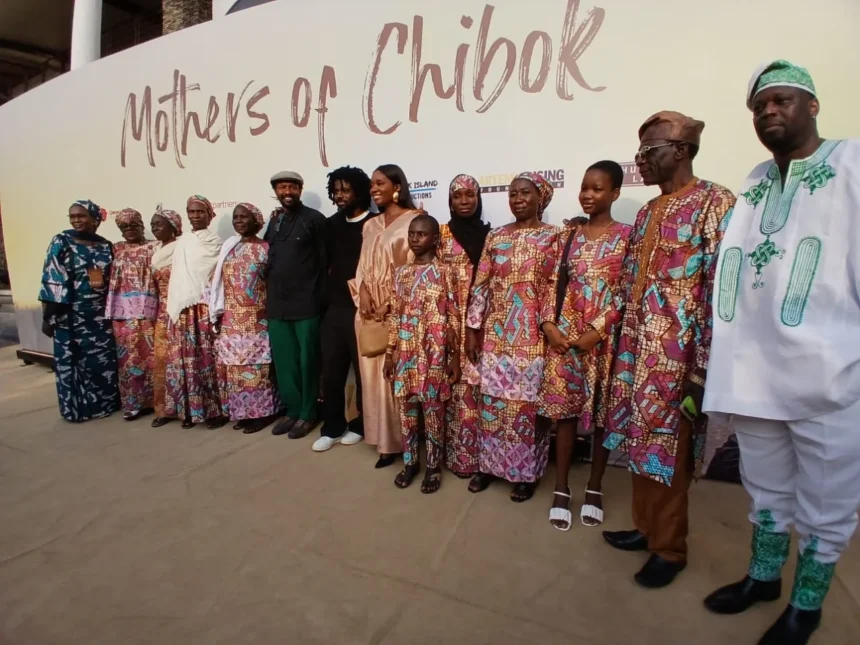
Emmy award-winning Nigerian filmmaker, Kachi Benson, has said that with his latest documentary, ‘Mothers of Chibok’, he has played his part in the search of peace, succour and geeral sanity in the nation.
He says the film is more than a film project but a pathway to building a sustainable enterprise for the women featured in it.
Speaking at the premiere on Saturday night in Lagos, Benson said his goal was not only to document resilience but to flip the narrative around Chibok and anchor it on economic empowerment.
During a fireside chat after the screening, the filmmaker said his dream was to make ‘Mothers of Chibok’ a brand that is associated with resilience, hope and courage, as opposed to abduction, kidnapping and terror.
The 86-minute documentary is a continuation of Benson’s long engagement with the Chibok story, following his 2019 film, ‘Daughters of Chibok’.
This time, the lens turns to the mothers, women who have often been reduced to headlines.
The documentary shows the daily activities of the women, who are predominantly farmers, doing back-breaking work on their farms, so they can send their children to school.
The documentary captures the nostalgia while remembering their daughters, and the fear of them never reuniting.
It further captures the lack of basic amenities, and total dependence on God for fertilisers and rain for a bountiful harvest.
The film also captures mothers homeschooling their children.
“If you think you know the story, think about it.
“The original impetus was not to frame these women through the lens of grief and tragedy but to frame them through the lens of strength,” he said.
He told guests that the project took three years, beginning in May 2021, with multiple trips to Chibok to earn trust and avoid what he described as an extractive storytelling approach.
“You have to be committed to spending time.
“Most storytellers spend a few days. We spent three years,” he said.
Benson recounted how one of the abducted girls, Lydia’s sister, was rescued during production, saying patience yielded unexpected results.
“I’m like, what are the odds?
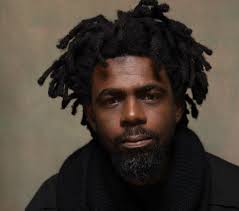
“It was such a beautiful way to wrap the story,” he said.
Beyond cinema, the filmmaker said he was now focused on impact.
He said a team worked with nine women in a pilot farming project, where they provided improved seeds, fertiliser and monitoring support.
The result, he said, was transformative.
“In 2025, November, they had their harvest and they all sort of together, recorded about a 100 per cent increase.
“In some cases, five, six hundred per cent,” he said.
Citing the example of one participant who moved from three bags of groundnuts to 26 bags within a year, he said the next step was value addition.
He said groundnuts from Chibok were now processed into peanut butter, paste, chocolate and other products branded Mothers of Chibok.
“We’ve taken the groundnuts from Chibok and we’ve converted them into a product that you can taste.
He said support for each woman — covering seeds, fertiliser and irrigation — costs about N1.5 million.
“The team hopes to scale from nine women to 100 by the end of 2026 and eventually reach 1,000.”
He called for partnerships, technical support and investment.
Benson said taking the film to cinemas was a ‘deliberate gamble’ aimed at strengthening documentary culture in Nigeria.
“I’ve played my part as a filmmaker.
“I hope that when we leave today, we leave with a better understanding of the mothers of Chibok.
“We leave not seeing them as stats but as humans with a story.
“When we look at them through that lens, I think that we will be moved from empathy to action,” he said.
Veteran actress and producer, Joke Silva, brought emotional depth and moral clarity to the fireside chat, centering the conversation on dignity and renewal.
Reflecting on the women’s journey, she invoked a spiritual metaphor, saying the film reminded her of a song that spoke of ‘rising out of the ashes’.
For Silva, what stood out was not tragedy but transformation.
“Out of the ashes of what they had been through, you see these women so dignified,” she said.
She noted how they continue to look after their children and insist on education no matter how heartbreaking it is.
She underscored that the documentary succeeded because it allowed audiences to see the women beyond their suffering.
“Tragedy happens, but what’s important is to be allowed to get through it, to the other side, and be given the respect that they deserve for getting through it and getting on with their lives,” she said.
According to her, the power of the film lies in its refusal to reduce the mothers to objects of pity, instead presenting them as figures worthy of admiration.
Silva also spoke about the broader cultural significance of the project, highlighting cinema’s ability to expand empathy.
“Some of us will never go to Chibok but we’ve been to Chibok on film,” she said.
In her view, that access carried responsibility.
She said the film had the capacity not only to document reality but to transform that area just by watching, by shifting perception and stirring engagement.
Beyond reflection, Silva challenged the audience toward action.
She pointed out that many in attendance were invited because of their capacity to help reduce the back-breakingness of the work that they do.
Hannatu Dauda, one of the beneficiaries, said through an interpreter, that before the intervention, her harvest was extremely low but with support, she achieved nine bags last year.
“What we need is support.
“Support of the women in the community to make our lives change and send our children to school,” she said.
Earlier, filmmaker and producer Femi Odugbemi described the documentary as a historic moment.
“For more than a decade, the name Chibok has echoed across the world as a headline, a hashtag, a symbol but what Kachi has done with this film is something far more powerful.
“He has restored humanity where the world once saw only statistics.
“Mothers of Chibok is historic because it reframes the narrative.
“It does not sensationalise pain. It dignifies it. It does not exploit trauma. It honours it,” he said.