

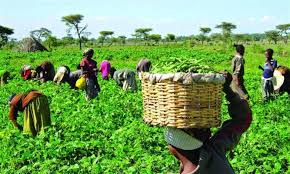
As Nigeria battles food insecurity, climate shocks and low farm productivity, experts say smart farming; the integration of digital tools, data analytics and climate-smart practices could offer a lifeline for millions of smallholder farmers.
In recent years, rising food prices, population growth and supply disruptions have intensified pressure on Nigeria’s food system, making agricultural transformation an urgent national priority rather than a long-term aspiration.
Smallholder farmers dominate Nigeria’s agricultural landscape, accounting for more than 80 per cent of farmers and producing up to 90 per cent of the country’s agricultural output, according to sector studies.
Yet, in spite of their importance, many operate with limited access to technology, finance and structured markets, thereby constraining their productivity and reinforcing cycles of rural poverty.
Agriculture remains a major pillar of Nigeria’s economy, contributing about 25 per cent to Gross Domestic Product (GDP) and employing more than one-third of the labour force, especially in rural communities.
However, productivity remains low because most farmers rely on manual tools, with less than one per cent owning tractors and only a small share of farmland under irrigation.
Consequently, agricultural output is highly dependent on rainfall, leaving farmers vulnerable to increasingly erratic weather patterns linked to climate change, including prolonged droughts and destructive flooding.
Industry stakeholders warn that without rapid modernisation, food insecurity will worsen, especially as Nigeria’s population; projected to exceed 375 million by 2050 continues to expand food demand.
Against this backdrop, smart farming has emerged as a viable pathway to modernisation by enabling farmers to use technology to make precise, data-driven decisions.
Recently, the Director-General of the National Information Technology Development Agency, Kashifu Inuwa, said digital supply chains and smart technologies could transform small-scale agriculture by improving efficiency and transparency.
According to him, smart farming technologies such as artificial intelligence, Internet of Things (IoT), sensors and blockchain can help farmers monitor crops, predict yields and strengthen supply-chain accountability.
He noted that such innovations can reduce post-harvest losses; which are estimated to range between 20 and 40 per cent for perishable commodities in Nigeria, while improving product quality and farmers’ incomes.
Broadly defined, smart farming refers to the use of technology; including mobile phones, satellite imagery, sensors and digital platforms to improve decision-making, reduce waste and optimise the use of inputs such as water and fertiliser.
Globally, the Food and Agriculture Organisation of the United Nations reports that small farms of less than two hectares produce about one-third of the world’s food, yet remain highly vulnerable to climate shocks and poor market access.
Similarly, digital agriculture is expanding worldwide as countries deploy precision technologies to increase yields while reducing environmental impact, a model experts say Nigeria can adapt to local realities.
Mathew Etinyin, a data analyst, told the News Agency of Nigeria (NAN) that digital solutions help farmers access weather forecasts, market prices and advisory services remotely, reducing dependence on physical extension services.
He pointed out that even simple tools, such as SMS-based advisory platforms, can significantly improve productivity by helping farmers determine optimal planting periods and manage risks more effectively.
Furthermore, agricultural technology researchers say smart farming, also called Agriculture 4.0, seeks to improve productivity, reduce costs and conserve resources through automation, analytics and real-time monitoring systems.
Development partners affirm that smart agriculture delivers measurable benefits when combined with farmer training, improved seed varieties and access to financing tailored to smallholders.
Foundation for Sustainable Smallholder Solutions (FSSS Nigeria), for instance states that field programmes in Nigeria demonstrate that climate-smart practices and improved inputs can raise yields by up to 50 per cent.
In the same vein, the Solidaridad Network reports that digital crop-monitoring platforms enable early detection of pests and extreme weather, thereby reducing crop losses.
Development economists also emphasise that mobile technology remains one of the fastest-spreading innovations in rural Africa, capable of linking farmers directly to buyers and reducing transaction costs.
Nevertheless, in spite of its promise, experts caution that smart farming adoption faces structural barriers, particularly in underserved rural communities.
Many farmers still rely on basic mobile phones, while limited broadband connectivity, unreliable electricity supply and low digital literacy hinder deployment of advanced technologies.
In addition, agri-finance experts note that poverty remains a major constraint, with numerous smallholder households living on less than 2.50 dollars per day and unable to invest in new technologies independently.
Moreover, policy analysts warn that without targeted public investment and inclusive strategies, smart farming risks benefiting primarily large commercial farms rather than smallholders.
On what should be done, Wilfred Itauma, an agritech expert, advocates a coordinated approach to ensure equitable adoption.
“First, government investment in rural broadband and electricity is critical to support digital agriculture platforms.
“Second, farmer training is essential. Agricultural training programs that teach climate-smart and digital farming techniques have already shown success in improving productivity and soil management,’’ Itauma said.
In addition, experts recommend strengthening digital value chains to connect farmers directly to processors and markets, thereby reducing intermediaries and improving farm-gate earnings.
They further stress that public-private partnerships are necessary to develop affordable, locally adapted smart farming tools designed specifically for smallholder realities.
Looking ahead, agricultural economists say technological transformation will be indispensable to feeding Nigeria’s rapidly growing population and meeting global food demand sustainably.
Research indicates that global food production must rise by about 70 per cent by 2050, underscoring the urgency of adopting innovation-driven agricultural systems.
If properly implemented, smart farming could help Nigeria achieve food security, raise rural incomes, reduce waste and build climate-resilient agricultural systems.
Ultimately, experts agree that digitising agriculture can boost productivity, create employment and strengthen Nigeria’s economy; provided smallholders are fully integrated into emerging digital ecosystems.
For Nigeria’s smallholder farmers, therefore, smart farming is no longer a futuristic concept but a necessary pathway to survival, sustainability and shared prosperity.
While challenges remain, stakeholders believe that with the right policy support, infrastructure investment and farmer education, smart farming can transform smallholder agriculture and secure Nigeria’s food future.