

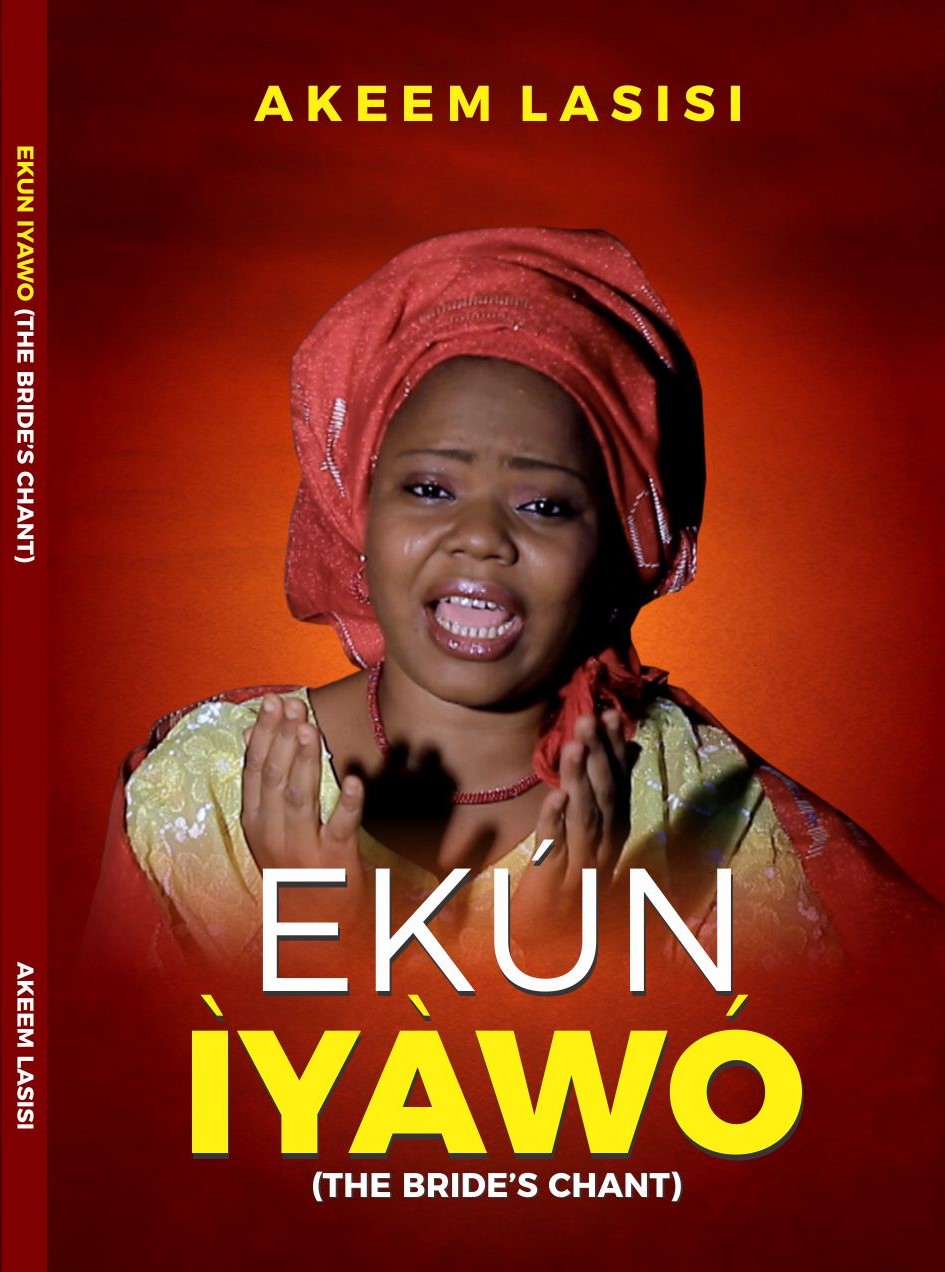
Ìyá mi, ìyá mi
Ewé mẹ́ta lè bá bá n já
Ẹ̀ bá bá n jáwé pẹ́pẹ́ kí n pẹ́ láyé
Ẹ̀ bá bá n jáwé tẹ̀tẹ̀ n tẹ̀’lú jìnnà
Ẹ̀ bá bá mi já’wé olúyèré o
Olúyèré, k’ọ́mọ ó yè lẹ́yìn mi o
Ire lónìí, orí mi àfi’re.
TRANSLATION:
Oh sweet, sweet mother,
Pluck for me three leaves from the garden of being.
Pluck for me a leaf of pẹ́pẹ́ tree
That long life will be my lot.
Pluck for me a leaf of tẹ̀tẹ̀
That my legs may tread the earth till kingdom come.
Pluck for me olúyèré’s leaf
Olúyèré: so that I may sleep in the midst of children
Ire lónìí: It is well with me.
A NOTE ON ẸKÚN ÌYÀWÒ
By Akeem Lasisi
As it has been from the beginning, marriage is a phenomenal stride in the life of a man or woman. It is a point of transition that impacts on a long future of not only the couple, but also of some unknown generations to come.
It is a source of cheer and fear. For the husband, especially in the African setting, while holding constant the joy of self fulfilment, one of the greatest challenges it poses is how to really be a husband by being able to address the socioeconomic demands of the matrimony. But for the bride who is already a victim of the cultural nature that makes the woman to leave her own family to join the man’s, the burden provoked by marriage is immeasurable.
The daughter of man is confronted by pain of departure. She has to leave behind her mother – the sweet, sweet mother – father, brothers and sisters and the entire extended family and friends.
Besides, she is crossing the bridge in a canoe of anxiety since she does not even know how she is going to be received and treated by the new family she is joining. The need for the bride-to-be to express her joy, sorrow and apprehension about marriage in a compelling form gave birth to ȨKÚN ÌYÀWÓ, a feminist oral poetry that particularly used to be popular among the Oyo/Osun Yorubas of the Western part of Nigeria. With the bride’s chant also being a part of the Igbomina culture, it is, therefore, a specialised genre in the realm of Iremoje and Oku although, unlike the two, it is not an elegiac poetry.
Ekun Iyawo came on stream only after due marriage processes had been observed. Among others, the man (often through the parents) had done the Ifojusode (The Search) and found his Miss Right. The Mo-mi-n-mo-o (First Meeting) and Ijohen (The Acceptance) rites had been observed while the wedding date had been fixed, meaning that an Ekun Iyawo carnival was already in the air.
To be continued
- From ẸKÚN ÌYÀWÒ (The Bride’s Chant)