
Lagos has again asserted its mega, country-within-country status as its House of Assembly has passed a ₦4.44 trillion budget for the 2026 fiscal year, adopting the House Committee on Economic Planning and Budget’s report.
By the volume, the state is commanding a budget comparable to some countries’ and about what some eight states in Nigeria are appropriating.
Experts will, however, say its about 20 million population is a big factor.
The Chairman of the committee, Mr Sa’ad Olumoh, presented the report during plenary on Thursday, outlining assumptions, projections and structure of the ‘Budget of Shared Prosperity’.
Olumoh said the framework was guided by macroeconomic indices, including an exchange rate benchmark of ₦1,512 to the dollar.
He added that assumptions included an inflation rate of 14.7 per cent, oil production of 2.06 million barrels daily, and a benchmark oil price of $64.
“The committee also reviewed the 2025 budget performance, recording a cumulative performance of 79 per cent as of November 2025,” Olumoh told lawmakers.
He said capital expenditure performance stood at 75 per cent, recurrent expenditure at 87 per cent, while overall revenue performance was also placed at 79 per cent.
“For 2026, the approved budget size is about ₦4.4 trillion, with recurrent expenditure of ₦2.052 trillion and capital expenditure of ₦2.185 trillion.
“The capital component underscores the government’s strong commitment to infrastructure development across the state,” Olumoh said.
He explained that the budget covered personnel costs, overheads, debt servicing and repayments, with a projected ₦243 billion deficit to be financed through approved options.
Speaker, Mudashiru Obasa, commended the committee, describing the budget as realistic, balanced and capable of driving inclusive economic growth.
Obasa said revenue-generating agencies had assured the House of collaboration to meet, and possibly exceed, projected revenue targets.
Mr Aro Moshood (Ikorodu 2) disclosed that an additional ₦171 billion was added to the budget during the legislative review process.
Mr Femi Saheed (Kosofe 2) said the budget size showed Lagos remained economically strong, provided all stakeholders fulfilled their responsibilities.
Similarly, Mr Gbolahan Yishawu (Eti-Osa 2) stressed the need for revenue reforms and prudent loan repayments to strengthen fiscal sustainability.
Following deliberations, the House adopted the committee’s report and passed the 2026 Appropriation Bill into law.
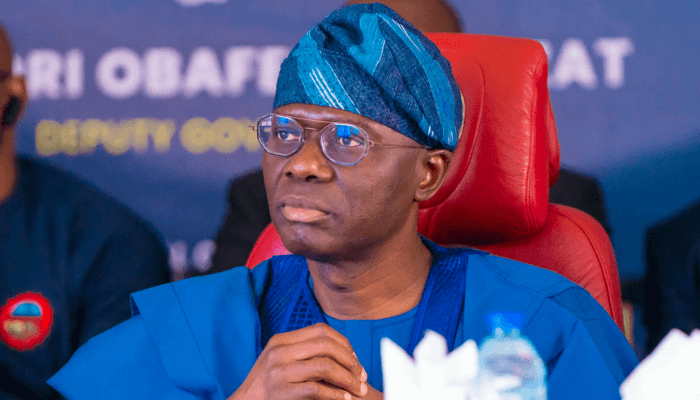
The Speaker directed the Clerk, Mr Olalekan Onafeko, to transmit the budget to Gov. Babajide Sanwo-Olu for assent.
The News Agency of Nigeria (NAN) reports that Sanwo-Olu presented a ₦4.237 trillion budget proposal to the Assembly on Nov. 25.
The governor said the budget aimed to accelerate economic growth, deepen infrastructure development and sustain fiscal responsibility.
He projected total revenue of ₦3.99 trillion, with ₦3.12 trillion from internally generated revenue and ₦874 billion from federal transfers.
Sanwo-Olu added that the deficit financing plan stood at approximately ₦243.3 billion for the 2026 fiscal year.