

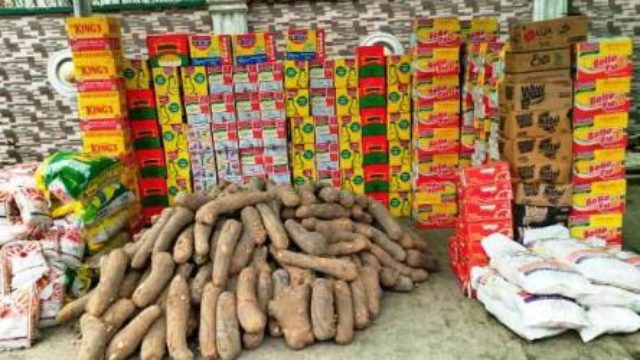
Prices of some food items have further dropped across markets in the Federal Capital Territory (FCT), Abuja, as residents welcomed the development.
A market survey conducted by the News Agency of Nigeria(NAN) across major markets in the FCT showed that while prices of several staples declined after the festive season, some food items remain expensive.
Some residents who spoke to NAN said the drop in prices had brought some relief but urged the government to ensure sustainability, as many households were still constrained by low purchasing power.
Latest food inflation statistics released by the National Bureau of Statistics (NBS) showed that Nigeria’s food inflation rate dropped in December 2025.
According to the NBS, food inflation stood at -0.36 per cent on a month-on-month basis, representing a decrease of 1.49 percentage points compared to the 1.13 per cent recorded in November 2025.
The bureau attributed the decline to a reduction in the average prices of items such as tomatoes, garri, eggs, potatoes, carrots, millet, vegetables, plantain, beans, wheat grain, ground pepper and fresh onions, among others.
At Garki Model Market, NAN observed notable price drops in several food items between November 2025 and January 2026.
A dustbin basket of big red tomatoes is being sold for between N5,000 and N5,500, as against N6,000 to N7,000, while a dustbin basket of shombo dropped to N3,000 from N4,500 to N5,000 recorded between November and December.
Similarly, a dustbin basket of fresh pepper dropped significantly, falling from between N4,500 and N5,000 to about N2,500, while tatashe dropped from between N5,000 and N6,000 to N3,000.
A dustbin basket of onions is being sold for N4,000 compared to N4,500 previously, and sweet potatoes dropped to between N1,000 and N1,800 from N3,000.
However, Irish potatoes recorded a sharp increase, increasing from 5,000 to N6,000 to between N9,000 and N10,000 per dustbin basket.
Rice prices remained relatively stable, with a 50kg bag of local rice selling for between N52,000 and N57,000, while foreign rice is being sold for N64,000. A 25kg bag of local rice is being sold for between N25,000 and N28,000.
At Nyanya Market, a dustbin basket of tomatoes sold for between N2,000 and N3,000, as against N4,000 during the festive season.
Onions dropped to N3,300 to N4,000 from N5,000 for a dustbin basket, while five medium-sized yam tubers now sell for between N4,500 and N5,000 compared to N5,000 to N7,500 previously sold.
One mudu of brown beans dropped from N1,000 to N700.
In Gwagwalada Market, food prices recorded a slight drop after the festive season, though many staples remained expensive.
A 50kg bag of foreign rice, which sold for N70,000 to N75,000 during Christmas, is now sold for between N65,000 and N70,000, while local rice dropped from N68,000 to between N62,000 and N66,000.
A medium-sized yam tuber dropped slightly from N4,000 to about N3,500.
The price of a live chicken dropped from between N20,000 to N25,000 to between N16,000 and N19,000, while a kg of cow beef dropped to N9,000 from N10,500. Frozen fish prices, however, remained unchanged.
At Apo Resettlement Market, prices of tomatoes, pepper and sweet potatoes declined, while onions and beef remained largely stable.
A dustbin basket of big red tomatoes dropped to between N3,500 and N4,000 as against N5,000 to N6,000, and tatashe dropped to N4,000 and N4,500 as against N5,500 sold during the festive period.
Pepper dropped significantly from N4,500 to N2,500 for a dustbin basket, as well as sweet potato, which dropped from N2,500 to N1,500, while a kg of beef remained at N8,000.
At Orange Market, Mararaba, NAN observed a sharp decline in the prices of tomatoes and pepper.
A big basket of tomatoe Jos dropped from between N23,000 to N25,000 to between N10,000 and N11,000, while fresh pepper dropped to N10,000 from N15,000.
Prices of beans, however, remained unchanged at between N750 and N800 per mudu.
Dei-Dei Market also recorded significant price reductions.
A big basket of derica tomatoes known as tomatoe Jos is presently being sold for between N8,000 and N12,000, as against N25,000 to N28,000, while a 50kg bag of fresh pepper dropped sharply to between N15,000 and N20,000 from N60,000.
A dustbin basket of sweet potatoes dropped to N1,000 as against N2,500 to N3,000 it was previously sold.
In Karu and Lugbe markets, prices of garri, beans, tomatoes and yams also eased, while Orozo Market recorded a rise in the price of brown beans, with a bag increasing from N42,000 to N49,000.
In Karu, five big yam tubers are being sold for between N8,000 and N10,000, as against N12,000 and N14,000, while in the Lugbe market, five medium-sized tubers of yams are being sold at N7,000 as against N10,000.
At Wuse Market, prices remained higher compared to other markets surveyed, though slight reductions were recorded in tomatoes, pepper, onions and tatashe.
A dustbin basket of Tatashe is selling for between N5,000 and N6,000 as against N7,000 and N8,000 while tomatoes are selling for between N7,000 and N7,500 as against N7,500 and N8,000.
At Orange Market, Mararaba, NAN observed a sharp decline in the prices of tomatoes and pepper.
A big basket of tomatoe Jos dropped from between N23,000 to N25,000 to between N10,000 and N11,000, while fresh pepper dropped to N10,000 from N15,000.
Prices of beans, however, remained unchanged at between N750 and N800 per mudu.
Dei-Dei Market also recorded significant price reductions.
A big basket of derica tomatoes known as tomatoe Jos is presently being sold for between N8,000 and N12,000, as against N25,000 to N28,000, while a 50kg bag of fresh pepper dropped sharply to between N15,000 and N20,000 from N60,000.
A dustbin basket of sweet potatoes dropped to N1,000 as against N2,500 to N3,000 it was previously sold.
In Karu and Lugbe markets, prices of garri, beans, tomatoes and yams also eased, while Orozo Market recorded a rise in the price of brown beans, with a bag increasing from N42,000 to N49,000.
In Karu, five big yam tubers are being sold for between N8,000 and N10,000, as against N12,000 and N14,000, while in the Lugbe market, five medium-sized tubers of yams are being sold at N7,000 as against N10,000.
At Wuse Market, prices remained higher compared to other markets surveyed, though slight reductions were recorded in tomatoes, pepper, onions and tatashe.
A dustbin basket of Tatashe is selling for between N5,000 and N6,000 as against N7,000 and N8,000 while tomatoes are selling for between N7,000 and N7,500 as against N7,500 and N8,000.
A dustbin basket of fresh pepper dropped from N5, 000 and N6,000 to between N4,000 to N4,500
Some traders attributed the post-Christmas price drop to reduced consumer spending in January and increased supply from harvests.
A tomato trader at Garki Market told NAN that more customers were now buying full baskets due to lower prices, although many still bought smaller quantities because of limited funds.
Cyril Okocha, a businessman said the fluctuations were largely seasonal, noting that crops such as tomatoes, peppers and onions could become expensive during off-season periods.
According to him, the main challenge is not just food prices but low income and irregular salary payments.
“Many workers are underpaid, salaries are not indexed to inflation, minimum wage is not fully implemented across states, and some workers are not paid regularly.”
“To ensure sustainability of food prices, the government should encourage dry season farming, improve food availability, security, regulate prices, and boost incomes, these are also essential to easing the cost-of-living crisis.”
Some residents also shared similar views. Yemisi, a civil servant, expressed satisfaction with the drop in prices of items such as tomatoes, pepper, rice and beans, but urged the government to ensure sustainability.
“The reduction is encouraging, but many people still cannot afford these items. Government should ensure the prices are sustained,” she said.
A security guard, Mohamed Gobiri, described the price drop as a welcome development, especially for rice, and appealed to the government to further ease food costs.
Meanwhile, farmers and agricultural experts have urged the Federal Government to adopt deliberate and long-term policies to sustain the decline in food prices.
Kabir Ibrahim, President, All Farmers Association of Nigeria (AFAN) said the current drop in food prices was largely driven by harvest-season factors and warned that prices could rise again without structural improvements.
Experts also recommend addressing insecurity, foreign exchange challenges and transportation costs to curb food inflation and ensure sustainable food security.