
Some economic stakeholders have expressed worry over the delay in the preparation of the 2026 budget. They noted with concern the delay in presenting the 2026 appropriation bill to the legislature for consideration.
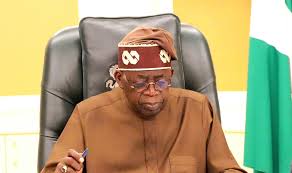
President Bola Tinubu finally presented a N58.47 trillion budget for the 2026 fiscal year to a joint session of the National Assembly on Dec. 19, 2025, ruling out the possibility of a January to December budget cycle.
The breakdown of the budget proposal shows that Security and Defence received the highest allocation of N5.41 trillion, followed by Infrastructure with N3.56 trillion, Education with N3.52 trillion, and Health with N2.48 trillion.
The budget is anchored on projected revenue of N34.33 trillion, estimated expenditure of N58.18 trillion, and N15.52 trillion set aside for debt servicing.
A renowned Economist, Prof. Ken Ife, advised the Federal Government to repeal the 2025 Appropriation Act and consolidate the new 2026 budget.
Ife, the Lead Consultant on Private Sector Development to the ECOWAS Commission, said that the country would be taken 10 years back by budget indiscipline and complete disregard of the Planning Law (FRA 2007).
He said that the budgeting benchmark was raised to an unreasonable and self-defeatist and unrealistic level of 75 dollars per barrel in 2025.
According to him, global three-year oil price prediction was between 65 dollars 70 dollars per barrel.
“This is creating an unlawfully high deficit and in turn crowding out capital expenditure in the 2024 budget and denying accretion to excess crude account and foreign reserves.
“The poor performance of 2024 capital expenditure warranted extension to March, June and Dec 2025.
“We now have an option to repeal the 2025 appropriation Act and consolidate the new budget as 70 per cent of the capital component is outstanding,” he said
According to Eze Onyekpere, Lead Director of the Centre for Social Justice (CSJ), the financial year is between January and December in line with the constitution.
Onyekpere said that if the National Assembly wanted another framework, they must amend the law, not shift dates arbitrarily.
“A financial year is 12 months. Everybody understands this. Even the Appropriation Act says you must not expend money after Dec. 31. What is happening now is unconstitutional,” he said.
He said that with the situation, capital projects that Nigerians desperately need are being delayed or reprioritised while recurrent expenditure like salaries and debt servicing take priority.
“The government has even directed MDAs to categorise their 2025 projects into urgent, less urgent and deferrable.
“That shows the confusion. At the end, Nigerians may not feel the impact of either the 2024 or 2025 budgets,” he said.
Another economist, Sanya Adejokun, said that the development was an aberration.
According to Adejokun, a budget is supposed to run for one year. If there is a need, you introduce a supplementary budget, but still within that year.
“Now, we have three budgets running side by side. Even civil servants in the budget office find it difficult to say which one is being implemented.
“The overlap is particularly troubling for transparency. If you check the Budget Office website today, you will not find clarity,” he said.
Co-founder of BudgIT Foundation, Seun Onigbinde, described the budgeting process as chaotic and uncoordinated, saying the system has completely broken down and lost direction.
Onigbinde said that the Federal Government had continued to extend multiple budgets beyond their calendar years, creating confusion in project execution and financial reporting.
He said that both the 2023 and 2024 budgets were extended to 2025 without proper justification, warning that such extensions distort fiscal management and weaken public trust in the budgeting process.
He said that, although the president signed the 2025 budget earlier in the year, capital implementation only began in October.
“The president signed the 2025 budget around March, but we only started capital implementation in October. It shows that there is a challenge in the fiscal structure of the Federal Government,” he said.
The Chief Executive Officer of the Centre for the Promotion of Private Enterprise (CPPE), Dr Muda Yusuf, described the 2026 budget as better structured than previous ones (2024 and 2025)
Yusuf said that its assumptions were more conservative and realistic than those of 2025.
He, however, said that the oil price benchmark of 64.85 dollars per barrel and production target still appear optimistic given Nigeria’s historical performance.
Yususf called for a downward review to enhance credibility.
He urged the National Assembly to resist inflating the budget through constituency projects.
“Repeated upward review of the budget often undermines implementation and public trust.
“The credibility of the budget is as important as its size,” he said.
Tajudeen Abbas, Speaker of the House of Representatives, cautioned against unrealistic projections in the 2026 budget.
Abbas said overly optimistic assumptions could undermine fiscal discipline and weaken public confidence in the budgeting.
He said that the experience of the outgoing 2025 fiscal year showed the importance of grounding budgets in credible, resilient and realistic assumptions.
“If 2025 was a year of adjustment and learning, 2026 must be a year of fulfilment.
“Growth must increasingly translate into jobs, higher incomes, and expanded opportunity.
“Fiscal discipline must continue to deliver fairness, efficiency and visible impact. Above all, the 2026 Budget must be grounded in credible targets, realistic assumptions, and disciplined implementation,” he said.
Analysts at PricewaterhouseCoopers (PwC) said that it was unclear if the 2026 budget would succeed.
According to the analysts, while parts of the budget reflect realism, aspects like strong revenue growth projections seem optimistic.
“Projected economic growth is strong at four per cent in 2026, slightly down from 4.5 per cent in 2025.
“Such growth would be enviable among advanced economies, but translating this into government revenue and achieving a surplus depends on various factors that drive government income.
“Revenue growth is expected to jump 15.3 per cent in 2026, surpassing both GDP and expenditure growth – the latter projected at nine per cent,” they said.
They said that the anticipated high revenue hinged on realising higher taxes and dividends from resource extraction, incomes, profits, and capital gains.
“This is a bold projection in a period of elevated global uncertainty.
“Expenditure growth focuses on enhancing essential services, including security, education, health, and agriculture,” they said.
Tinubu said that the 2026 budget would be guided by better revenue mobilisation through efficiency, transparency, and compliance, and better spending by prioritising projects that can be completed, measured, and felt by citizens.
The President said that it would also be guided by better accountability through strengthening of procurement discipline, monitoring, and reporting.
He said that 2026 would be a year of stronger discipline in budget execution.
According to him, the relevant authorities should ensure that the 2026 budget is implemented strictly in line with the appropriated details and timelines.
As the National Assembly prepares to consider the 2026 budget for approval, Nigerians call for a more purposeful and impactful budget implementation.