

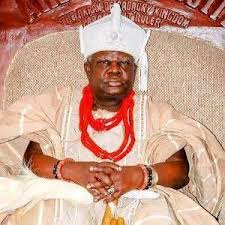
Gov. Babajide Sanwo-Olu of Lagos State on Monday expressed deep sorrow over the death of the Akran of Badagry, Oba Aholu Menu-Toyi Babatunde.
The governor described the Oba’s passing as a painful loss to Badagry, the state and the nation at large.
In a condolence message issued through his Special Adviser on Media and Publicity, Mr Gboyega Akosile, the governor expressed his condolences over the passing of the Akran.
He said the Oba’s transition marked the end of an era defined by wisdom, cultural preservation and unwavering commitment to the development of Badagry.
The News Agency of Nigeria (NAN) reports that the revered traditional ruler, a prominent member of the Lagos State Council of Obas and Chiefs, died on Monday after a brief illness.
He reigned as the Akran of the ancient Badagry Kingdom for nearly 49 years.
Sanwo-Olu noted that the late Akran was not only a custodian of tradition but also a bridge between heritage and modern development.

He added that his influence extended beyond Badagry to Lagos State and Nigeria at large.
According to the governor, the traditional ruler rendered selfless service to his people and left behind a legacy of unity, peace and progress.
He described the traditional ruler as a stabilising force who brought together diverse interests within the kingdom.
He added that the late Akran consistently promoted Badagry’s rich historical sites and cultural festivals, both nationally and internationally, thereby boosting tourism and cultural exchange.
“On behalf of my wife, the government and people of Lagos State, I commiserate with the people of Badagry, the royal family, friends, associates and traditional institutions on the transition of the paramount ruler of Badagry Kingdom.
“The Akran, Oba Babatunde Wheno Aholu Menu-Toyi I, was the Permanent Vice Chairman of the Lagos State Council of Obas and Chiefs,” Sanwo-Olu said.
He added that the late Oba, who was also a respected journalist, made remarkable contributions to the growth and development of his community and used his position as a first-class traditional ruler to attract development to the ancient town.
Sanwo-Olu urged the royal family, subjects and the entire people of Badagry to immortalise the late Akran by upholding the values he stood for and sustaining his vision for unity and progress.
He prayed that God would grant the royal family, the people of Badagry Kingdom and Lagos State the strength to bear the irreparable loss.
NAN District Correspondent, who visited the palace in Badagry, reports that traditional rulers and chiefs were present, mourning the demise of the late Akran.
NAN also reports that sons and daughters of the late king were at the palace, with some seen openly weeping.
A traditional chief, who spoke on condition of anonymity, said the Akran passed on at about 1:30 a.m., but confirmation of his death was made at about 5:30 a.m.
“The Chairman of Badagry Local Government Area, Mr Babatunde Hunpe, has been informed, and we hope he will relay the information to Gov. Babajide Sanwo-Olu for an official announcement.
“That is why many of us are seated here at the palace to receive visitors.
“The Akran has gone to rest with his great ancestors,” he said.
NAN reports that several traditional rulers and chiefs visited the palace to hold consultation ahead of the official announcement of the passing of the late Akran.
NAN further reports that the late monarch was born on Sept. 18, 1936, the fifth child of His Majesty De Wheno Aholu Ajiyon-Kanho, the 17th Akran of Badagry.
He had his formal education at Salvation Army Primary School, Lagos; Methodist School, Badagry; and Methodist Teachers’ College, Ifaki, Ekiti (1956–1957).
A royal figure of many parts, the late Akran was initially a teacher and taught in various schools within the Badagry Division.
His appointment as the Akran of Badagry was approved by the Executive Council of the Lagos State Government on Oct. 7, 1976.
He ascended the throne of his forebears during a coronation ceremony held on April 23, 1977, where he was crowned and assumed the royal title De Wheno Aholu Menu-Toyi I, in accordance with tradition