

The Kaduna State Government, in a strategic partnership with UNICEF and with funding from the Government of the Netherlands, has concluded a major training program designed to ensure the long-term sustainability of rural water systems. a cohort of 21 local mechanics graduated from the intensive training, which focused on the rehabilitation and maintenance of hand-pumped and solar-powered boreholes.
Speaking at the closing ceremony on thursday in Kaduna, Dr. Gerida Birukila, the UNICEF chief of field office in Kaduna, emphasized the critical importance of building local capacity to ensure that rural communities have sustained access to clean water. she noted that providing infrastructure is not enough without the local expertise to repair and maintain it.
The training, which is part of a broader effort to improve water, sanitation, and hygiene (wash), represents a significant investment in community resilience and self-sufficiency, giving residents the tools to manage their own water resources for years to come.
She said ,“It’s not enough to provide water facilities like boreholes or sanitation infrastructure if they can’t be repaired when they break down. So sustainability is key.”
Among the graduates were two women, a significant milestone in UNICEF’s ongoing efforts to promote gender inclusion in the Water, Sanitation, and Hygiene (WASH) sector
“We hope to see a sustained supply of clean water across all local government areas.
“I want to see children staying in school, reduced disease outbreaks, and communities becoming healthier and more resilient.
“Water is life. Access to clean water reduces illness, boosts school attendance, and improves nutrition. With these mechanics now in place, communities can look forward to safer, healthier lives.,” Birukula said.
The Director-General of the Kaduna State Rural Water Supply and Sanitation Agency (RUWASSA), Mubarak Ladan, reiterated that the training was designed not just to provide skills, but to foster local ownership of water infrastructure.
Ladan said that constructing facilities and handing them over to communities is not enough.
“There must be strategies for proper ownership and long-term maintenance,” he said.
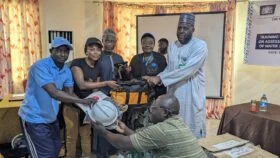
The News Agency of Nigeria (NAN), reports that the newly trained local mechanics were presented with start-up toolboxes and certificates to enable them begin immediate service in their communities.
The training is part of the broader Accelerating Sanitation and Water for All (ASWA III) initiative, which focuses on increasing access to safe water, sanitation, and hygiene services in underserved communities.
In Kaduna State, the project is being implemented in Lere and Kagarko LGAs, based on a transparent selection process.
Local governments were invited to apply, and the two LGAs were chosen based on pre-established criteria not through direct nomination by UNICEF or RUWASSA.